
Why Heat Pump Size Matters and What Happens If You Go Too Big
When choosing a heat pump, it can be tempting to think that bigger must be better. If your home needs a certain amount of heat, surely choosing a larger heat pump gives you a little extra security? Not necessarily.
The best heat pump is not the biggest one you can fit or afford. It is the one that has been correctly selected for the heating requirements of your home.
Choosing a unit that is larger than necessary can mean paying more for equipment you do not need. It can also affect the way the system operates. Choosing one that is too small can create a different set of problems if it cannot meet the heating requirements of the property under the conditions it was designed for. Correct heat pump sizing therefore sits somewhere in the middle.
The goal is to understand what the property actually requires and design the complete heating system around that figure. That is why heat pump sizing should start with the home, not the product catalogue.
Why Heat Pump Size Matters and What Happens If You Go Too Big
Heat pump output is usually measured in kilowatts, or kW.
This describes the amount of heat the unit can provide under specified conditions.
You might therefore see heat pumps described as 5 kW, 8 kW, 12 kW or another output.
But that does not mean an 8 kW heat pump is automatically right for a particular size of house.
Two homes with similar floor areas can have very different heating requirements.
One might have modern insulation, good glazing and relatively low heat loss.
The other might be an older property with solid walls, older windows, several extensions and higher heat loss.
The number of bedrooms does not provide enough information either.
The heat pump needs to be selected around how much heat the actual property requires.
What Does Heat Pump Size Actually Mean?
Floor area can tell an installer something about a property. It cannot tell them everything.
Consider two homes that are both 150 square metres. The first has good insulation, modern windows and relatively little exposed external wall area. The second is an older detached property with solid walls, large windows and considerably greater exposure.
Although their floor areas are the same, the amount of heat required to keep each home comfortable during cold weather could be very different. This is why simple rules based on square metres or bedroom numbers should not replace a proper heat loss calculation.
The Energy Saving Trust installer guidance sets out a process that begins with a room by room heat loss calculation and then selects a heat pump capable of meeting the property’s heating demand at its design conditions.
The calculation comes first. The equipment comes afterwards.
Why You Cannot Size a Heat Pump From Floor Area Alone
This is where heat pump sizing connects directly with good retrofit planning.
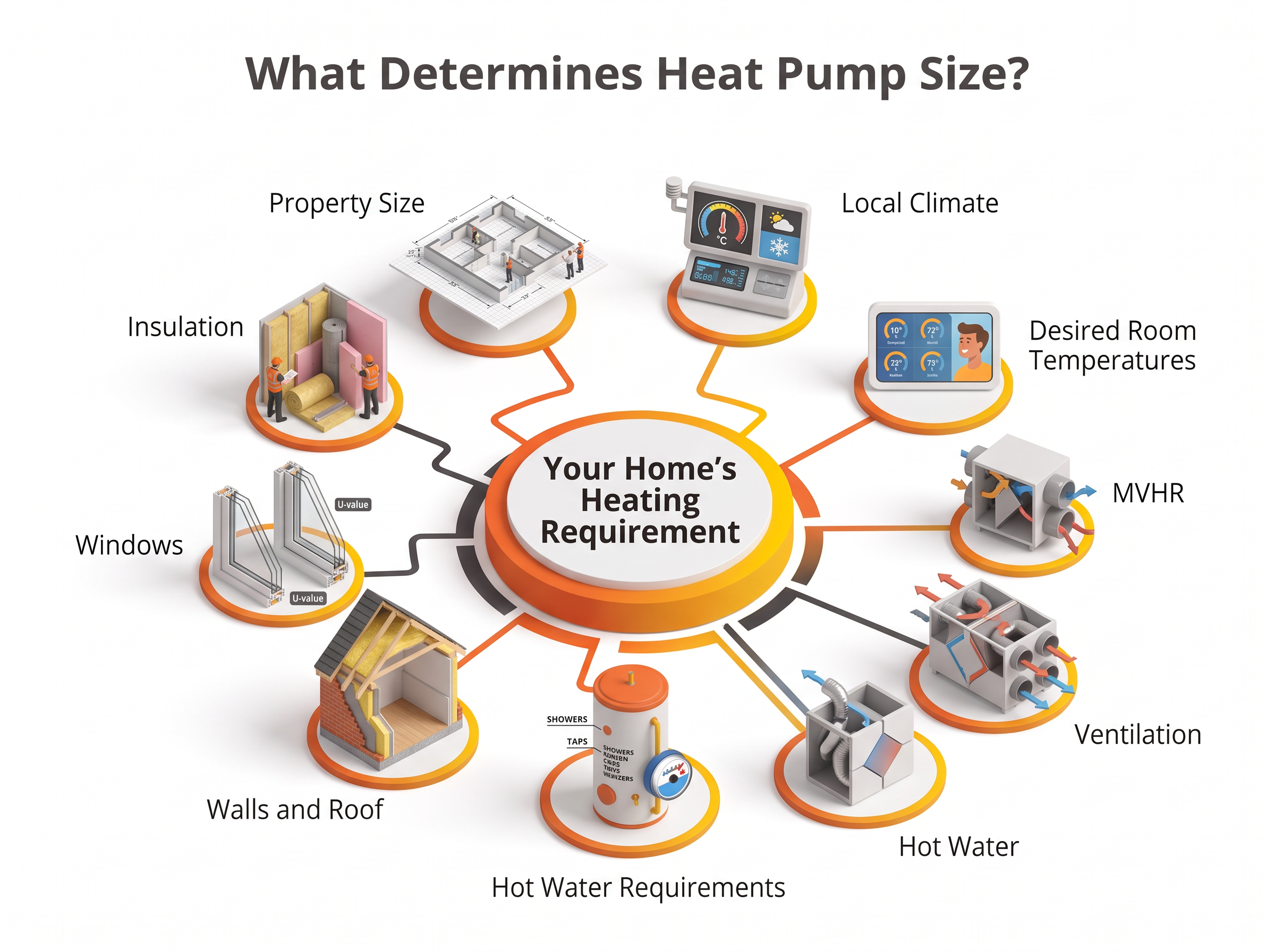
The amount of heating your property requires is affected by the building itself.
That includes:
- Walls
- Roof
- Floors
- Windows
- Doors
- Insulation
- Ventilation
- Extensions
- Desired indoor temperatures
- Local outdoor conditions
If you are planning significant changes to any of these areas, they may affect the future heating requirement.
For example, improving insulation can reduce the amount of heat escaping from the building.
That is why Renewable Heat believes it is useful to understand the wider home before finalising the heating system.
For homeowners planning several improvements, independent whole home advice can also help establish what work should happen first.
Our partnership with Loco Home Retrofit CIC helps homeowners take this broader approach.
Loco Home Retrofit can provide independent whole home planning, while Renewable Heat can then provide the detailed heating system design and installation expertise required to turn the relevant recommendations into a practical system.
Start With the Whole Home
Your home is constantly losing heat. Heat moves through walls, windows, roofs and floors. Warm air can also leave through ventilation and unwanted air leakage. When outdoor temperatures fall, more heating is required to replace that lost heat and maintain a comfortable indoor temperature.
A heat loss calculation estimates how much heat the property needs under specified outdoor conditions.
For heat pump design, this should be considered room by room. That matters because individual rooms can behave very differently. A large living room with several external walls and large windows may require considerably more heat than a smaller bedroom surrounded by other heated rooms. An older part of a house may also lose more heat than a recently constructed extension.
A detailed Home Assessment helps Renewable Heat understand these differences before the system is designed.
What Is a Heat Loss Calculation?
The calculation can consider factors such as:
- The dimensions of each room
- External wall construction
- Insulation
- Floor construction
- Roof or ceiling construction
- Windows
- Glazing
- Doors
- Ventilation
- Desired indoor temperature
- Outdoor design temperature
The result is an estimate of how much heat each room needs. Those room figures can then contribute to the heating requirement for the property as a whole.
Independent Energy Saving Trust guidance also identifies accurate room by room heat loss calculations as the foundation for heat pump system design.
This information is useful for more than selecting the heat pump. It also helps determine whether the radiators or underfloor heating can provide the required heat in each room.
What Does a Room by Room Heat Loss Calculation Consider?

A heating system needs to work when you need it most. That means the design cannot be based only on average annual temperatures. The installer needs to consider the outdoor temperature used for heating design in the property’s location. This is particularly relevant in Scotland, where winter conditions vary depending on geography, altitude and exposure.
A home in a relatively sheltered location may experience different conditions from a more exposed rural property.
The purpose of the design calculation is to make sure the heating system can provide the required heat when outdoor temperatures reach the conditions used for the design.
That is more meaningful than simply selecting a larger heat pump to account for cold weather.
Why Does Local Climate Matter?
Imagine your property currently has relatively high heat loss, but you are planning significant insulation improvements. If those improvements reduce the amount of heat the property loses, they could affect the future heating requirement.
This does not mean every possible retrofit measure must be completed before a heat pump can be installed.
The Energy Saving Trust confirms that heat pumps can work in properties that are not fully insulated. The important thing is that the system is designed around the actual heating requirements of the property.
But where improvements are realistic and already planned, it makes sense to consider them. This is where a whole home retrofit plan can become particularly valuable. Instead of treating insulation, ventilation and heating as unrelated projects, you can consider how one decision affects another.
Why Do Planned Retrofit Improvements Matter?
Oversizing can sound like the safer option. If the property needs 8 kW of heat, why not install something significantly larger just in case? Because a heat pump does not spend the entire year operating at the coldest design condition. For much of the heating season, the property requires less heat.
Modern heat pumps can often adjust their output to respond to changing demand, but every unit has limits to how far it can reduce that output. If the heat pump cannot reduce its output enough to match a relatively low heating demand, it may reach the required temperature and switch off. A short time later, it may need to start again.
Repeated stopping and starting is known as cycling.
Energy Saving Trust guidance specifically identifies excessive cycling from an oversized heat pump as something accurate heat loss calculations can help avoid.
What Happens If a Heat Pump Is Too Big?
\
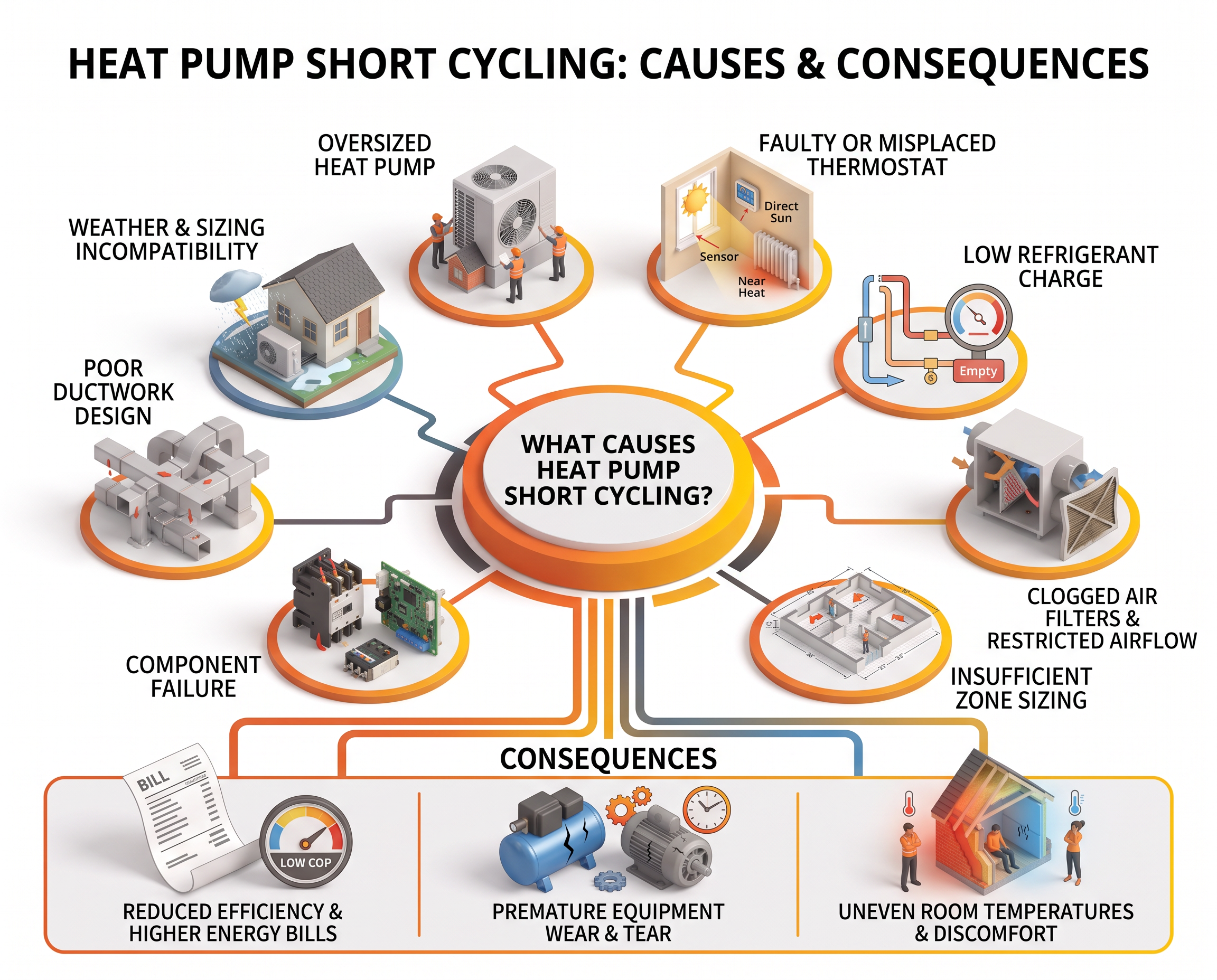
Short cycling happens when the heat pump operates for a relatively short period, switches off and then starts again soon afterwards.
Heat pumps are generally intended to operate steadily rather than constantly stopping and restarting.
Excessive cycling can potentially:
- Reduce operating efficiency
- Increase stopping and starting
- Place additional wear on components
- Make system operation less stable
That does not mean every time a heat pump switches off there is a problem.
Normal operation will naturally involve changes in output and operating periods.
The concern is unnecessary or excessive cycling caused by a mismatch between the system and the heating demand.
What Is Short Cycling?
There is another straightforward reason not to oversize.
Larger equipment can cost more.
Depending on the system, choosing a larger unit may also affect:
- Electrical requirements
- Pipework
- System volume
- Installation requirements
- Outdoor space
If the property does not need the additional capacity, paying for it provides little benefit.
The goal is not to buy the most powerful heat pump.
It is to buy the appropriate heat pump.
Bigger Can Also Mean More Expensive
Oversizing is not the only sizing problem. An undersized heat pump may struggle to provide the amount of heat required when outdoor conditions reach the design temperature. That can affect comfort and potentially increase reliance on additional heating, depending on how the system has been designed.
This is why the answer is not simply to choose a smaller heat pump either. The aim is accurate sizing.
Energy Saving Trust guidance on heat loss calculations highlights both sides of the issue, including the risk of an undersized heat pump working excessively and an oversized unit cycling too frequently.
The calculation is intended to avoid both extremes.
What Happens If a Heat Pump Is Too Small?
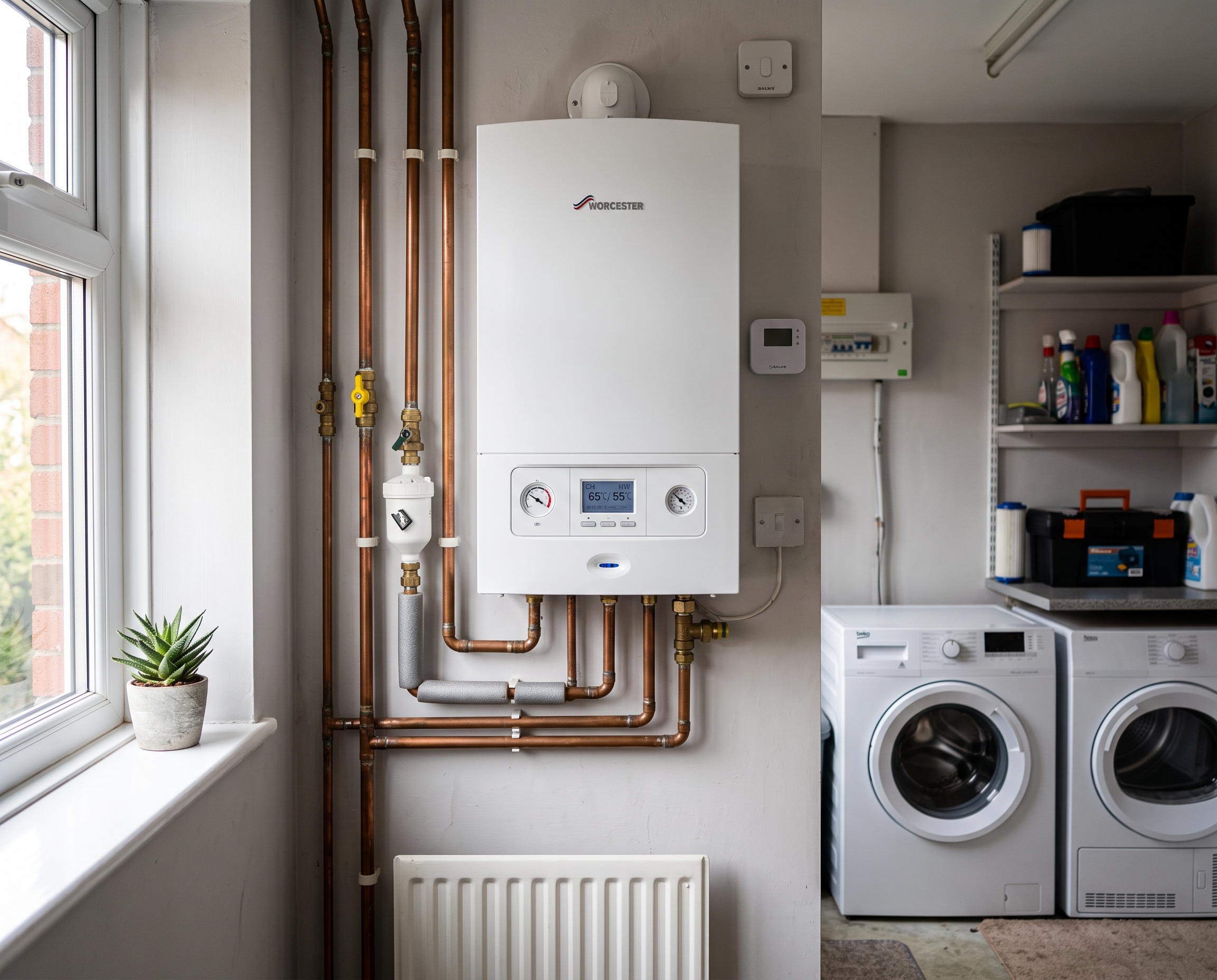
Another common shortcut is to look at the boiler being removed.
If the existing boiler is rated at 24 kW, it can seem logical to assume you need a 24 kW heat pump. That is not how the system should be sized.
Boilers are often capable of providing significantly more output than the space heating requirement of the property.
A combi boiler also needs substantial output to provide hot water quickly, which can make its rated capacity particularly misleading when compared with a heat pump.
The heat pump should therefore be sized around calculated heating demand rather than simply copying the number printed on the existing boiler.
Why the Previous Boiler Size Is Not the Answer
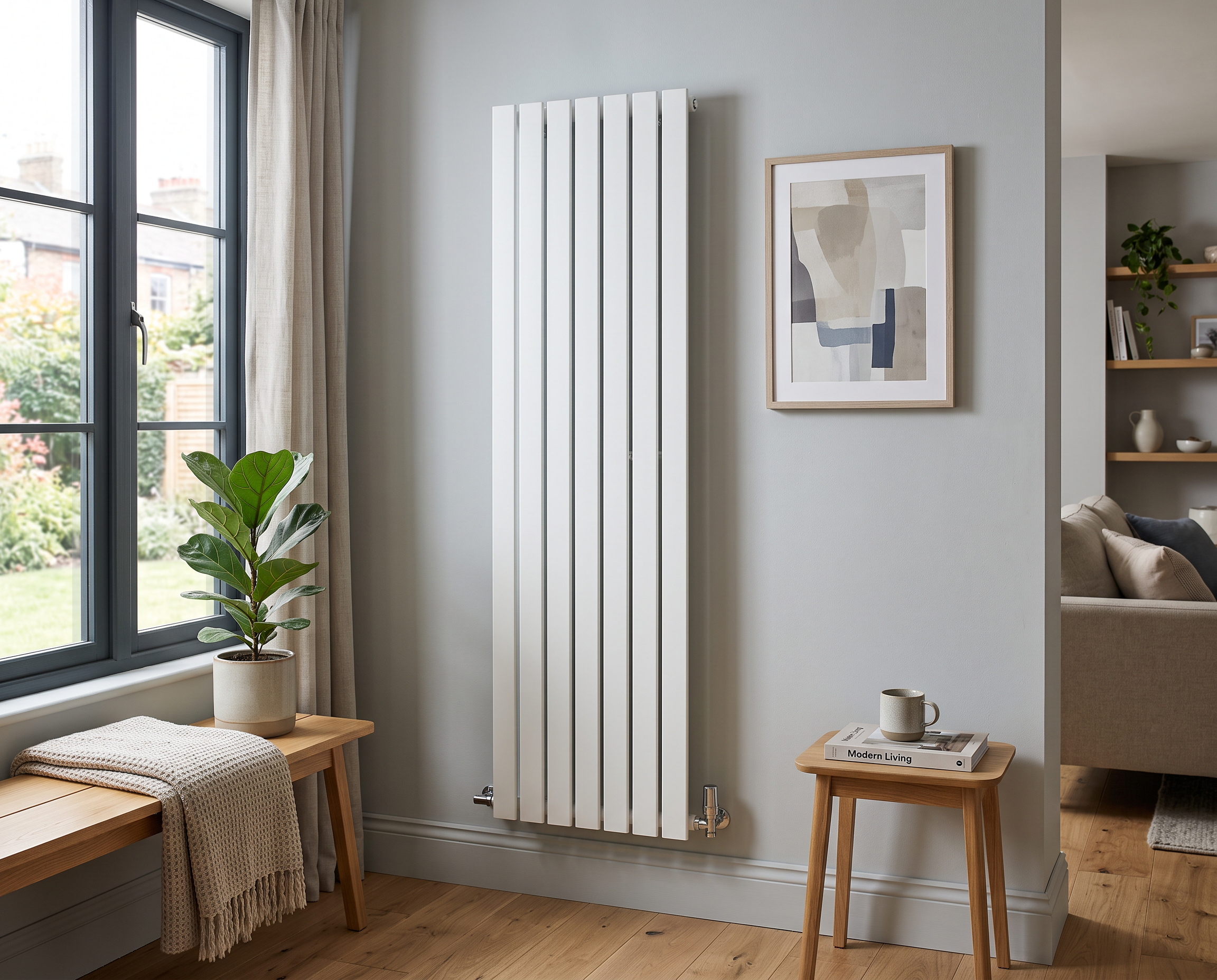
Selecting the correct heat pump does not automatically mean the heating system is finished. The heat still needs to get into the rooms. This is where radiator sizing becomes important.
Heat pumps generally operate at lower water temperatures than traditional boilers. A radiator that provided enough heat with very hot water may provide less heat at a lower temperature. Each radiator therefore needs to be assessed against the heating requirement of its room.
Some existing radiators may already be suitable. Others may need to be larger. The aim is not to replace everything. It is to identify what can stay and what genuinely needs changing.
Radiators Are Part of the Sizing Conversation
Underfloor heating can be particularly well suited to heat pumps because it distributes heat across a large surface area.
This allows the system to provide comfortable heating using relatively low water temperatures.
It can be particularly useful in:
- Extensions
- Renovations
- Newly built homes
- Open plan areas
But underfloor heating is not required for every heat pump. A properly designed radiator system can also work effectively. Again, the answer depends on the property.
Underfloor Heating Can Work Well With Heat Pumps
Correct heat pump sizing does not compensate for unsuitable pipework. The heating system needs to move enough water around the property to deliver the required heat.
Existing pipework may already be suitable. Other homes may contain sections that restrict the required flow.
This is particularly relevant during retrofit projects where the heating system may have been altered several times over the years. Extensions, radiator changes and previous boiler installations can all leave their mark.
This is why Renewable Heat approaches a heat pump retrofit as a complete heating project rather than simply an equipment replacement.
Pipework Matters Too
Domestic hot water is another part of the design. Homes moving away from a combi boiler will commonly require a suitable hot water cylinder. The cylinder needs to be selected around household demand.
A couple living in a smaller home may have very different hot water requirements from a family using several bathrooms.
This is important because space heating and domestic hot water are related parts of the complete system, but they should not be confused when calculating what the property requires for heating.
A professional design needs to consider both.
Hot Water Needs to Be Considered Separately
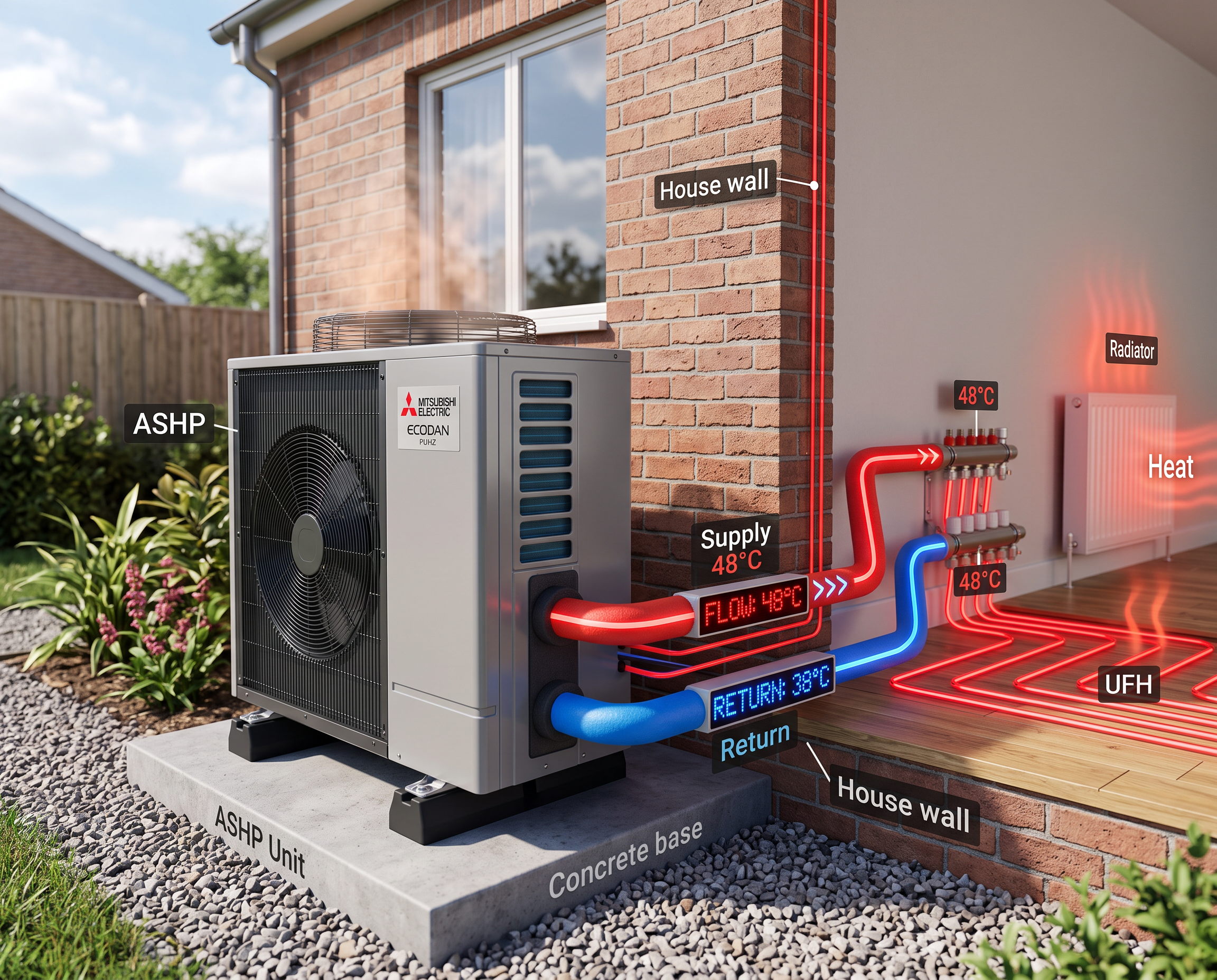
Heat pump efficiency is influenced by the temperature the system needs to produce.
In general, a heat pump can operate more efficiently when it can provide the required comfort using lower heating water temperatures.
This is why radiator sizing, underfloor heating and heat loss are closely connected to heat pump performance.
Energy Saving Trust guidance explains that heat pump efficiency is influenced by factors including outdoor temperature and the flow temperature of the heating system.
The published efficiency figure for the heat pump itself therefore does not tell you exactly how it will perform in every home.
The wider system design matters.
Flow Temperature Affects Performance
A correctly sized heat pump still needs appropriate controls.
Weather compensation can allow the heating system to adjust its water temperature according to outdoor conditions. When the weather is mild, the home requires less heat. The system may therefore be able to operate at a lower water temperature.
When outdoor temperatures fall, the required heating water temperature can increase.
This allows the heating system to respond to changing demand rather than operating at the same temperature throughout the heating season.
Correct sizing, suitable radiators and appropriate controls all work together.
Controls and Weather Compensation Matter Too
Sizing a heat pump for an existing property can involve more than entering dimensions into software.
Existing homes can contain:
- Several heating zones
- Different types of radiator
- Underfloor heating
- Extensions
- Older pipework
- Different insulation standards
- Several bathrooms
- Existing energy technologies
- Rooms that have historically been difficult to heat
An experienced installer should know what to look for and how those factors could affect the design.
That does not mean complicated properties are unsuitable for heat pumps. It means the system needs to be designed around the actual property.
Renewable Heat has more than 20 years of experience designing and installing home energy systems, including heat pump retrofits.
Our approach is to understand the home first and then select the equipment.
Why Retrofit Experience Matters
You should not simply be given a heat pump size without understanding where the recommendation came from.
Your installer should be able to explain:
- How the property’s heat loss was calculated
- What outdoor design conditions were used
- Why the proposed heat pump was selected
- Whether existing radiators are suitable
- Which radiators need upgrading
- Whether pipework changes are required
- What heating water temperatures are proposed
- How domestic hot water will be provided
- How the system will be controlled
- How the installation will be commissioned
If the answer to “Why have you chosen this size?” is simply “bigger is safer”, it is reasonable to ask more questions.
What Should Your Heat Pump Installer Be Able to Explain?
Correct sizing is only useful if the system is then installed and commissioned properly.
Commissioning can include checking system flow, balancing the heating system, configuring controls and confirming that the heat pump and wider system are operating as designed.
The homeowner should also be shown how the controls work.
Support afterwards matters too.
Renewable Heat provides repairs, servicing and maintenance for home energy systems.
Annual servicing is recommended, while remote monitoring may also be available for suitable systems.
What Happens After the Heat Pump Is Installed?
The most useful way to think about heat pump sizing is as part of a process.
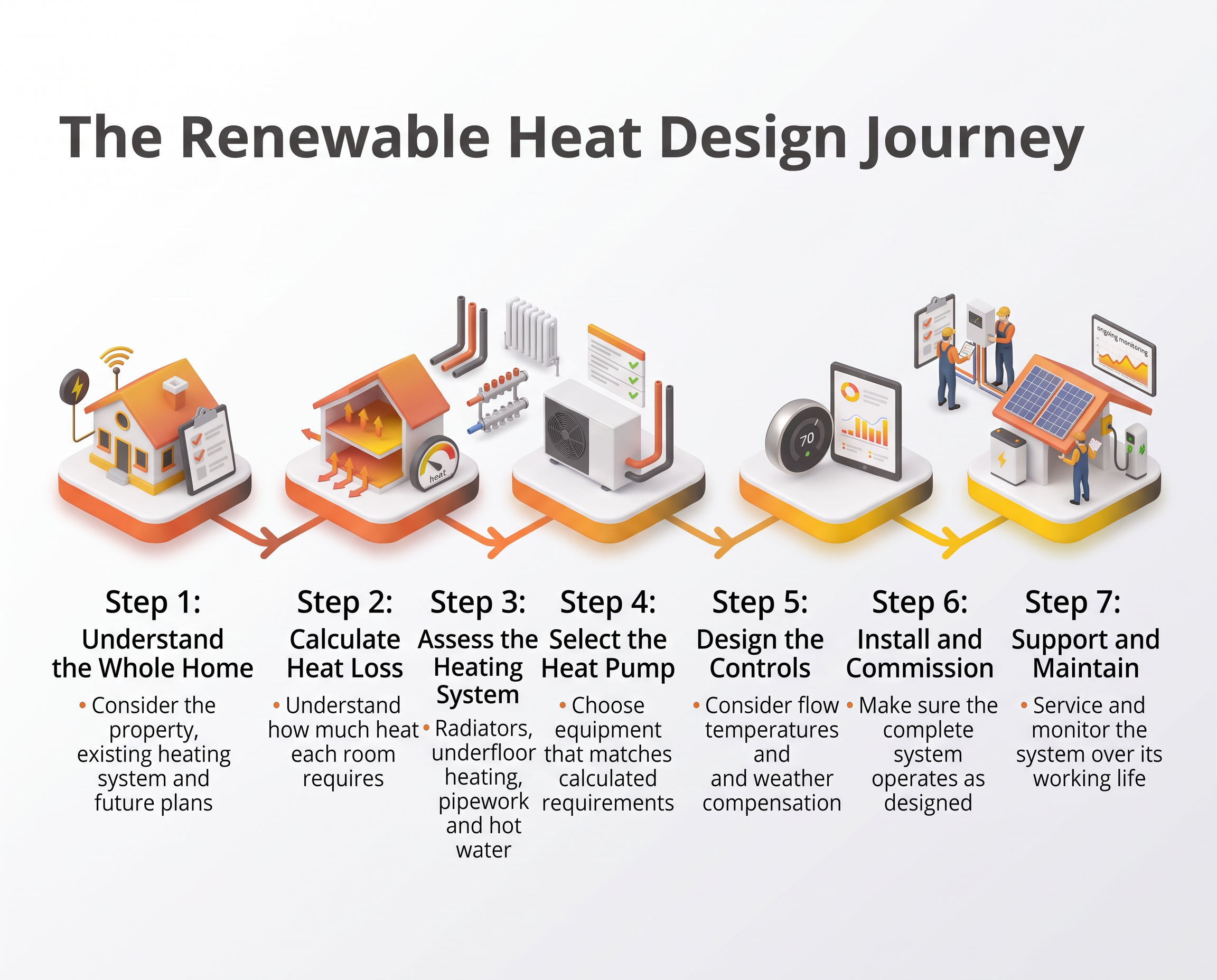
Plan First, Size Second, Install Third
When it comes to heat pumps, bigger is not automatically better. Smaller is not automatically more efficient either. The goal is appropriate sizing.
A well designed heat pump should be selected to meet the calculated heating requirements of the property while working effectively with the radiators, pipework, controls and wider heating system.
That is why choosing a heat pump should begin with calculations rather than assumptions. It should also begin with an understanding of the wider home.
If you are planning insulation, ventilation or other retrofit improvements, those plans should be considered. If your existing heating system is complicated, that should be understood before equipment is selected. And if future technologies such as solar PV or battery storage are part of your plans, those can also be considered as part of a wider home energy strategy.
Renewable Heat has more than 20 years of experience designing and installing home energy systems, including air source heat pumps, ground source heat pumps, underfloor heating, solar PV and battery storage.
For homeowners considering wider retrofit work, our partnership with Loco Home Retrofit CIC can also provide a route from independent whole home planning through to detailed heating system design and installation.
The first question is not:
How big a heat pump can we install?
It is:
How much heat does your home actually need?
Call 0330 022 0480 or email sales@renewableheat.com to arrange a home assessment and discuss the right heat pump system for your property.
The Right Size Makes the Difference
COP tells you how efficiently a heat pump works under a particular set […]
If your boiler is nearing the end of its life, you have more […]
A heat pump uses electricity to provide heating and hot water. Solar panels […]


