
Heat Pumps vs Boilers: The Truth About the Cost
If you have been looking into heat pumps, you have probably seen the upfront price and thought the same thing many homeowners do.
That looks like a lot more than a new boiler.
In many cases, an air source heat pump will cost more upfront than a straightforward boiler replacement. But comparing the price of a heat pump with the price of a boiler alone does not always give you the full picture.
A boiler replacement can sometimes mean replacing one appliance with another.
A heat pump installation often involves looking at the complete heating system. That can include the heat loss of the property, radiator sizes, pipework, hot water requirements, heating controls and any improvements needed to allow the system to operate efficiently.
That distinction is important.
The question is not simply:
Which piece of equipment costs less?
A more useful question is:
What work does my home actually need, and what am I getting for the money?
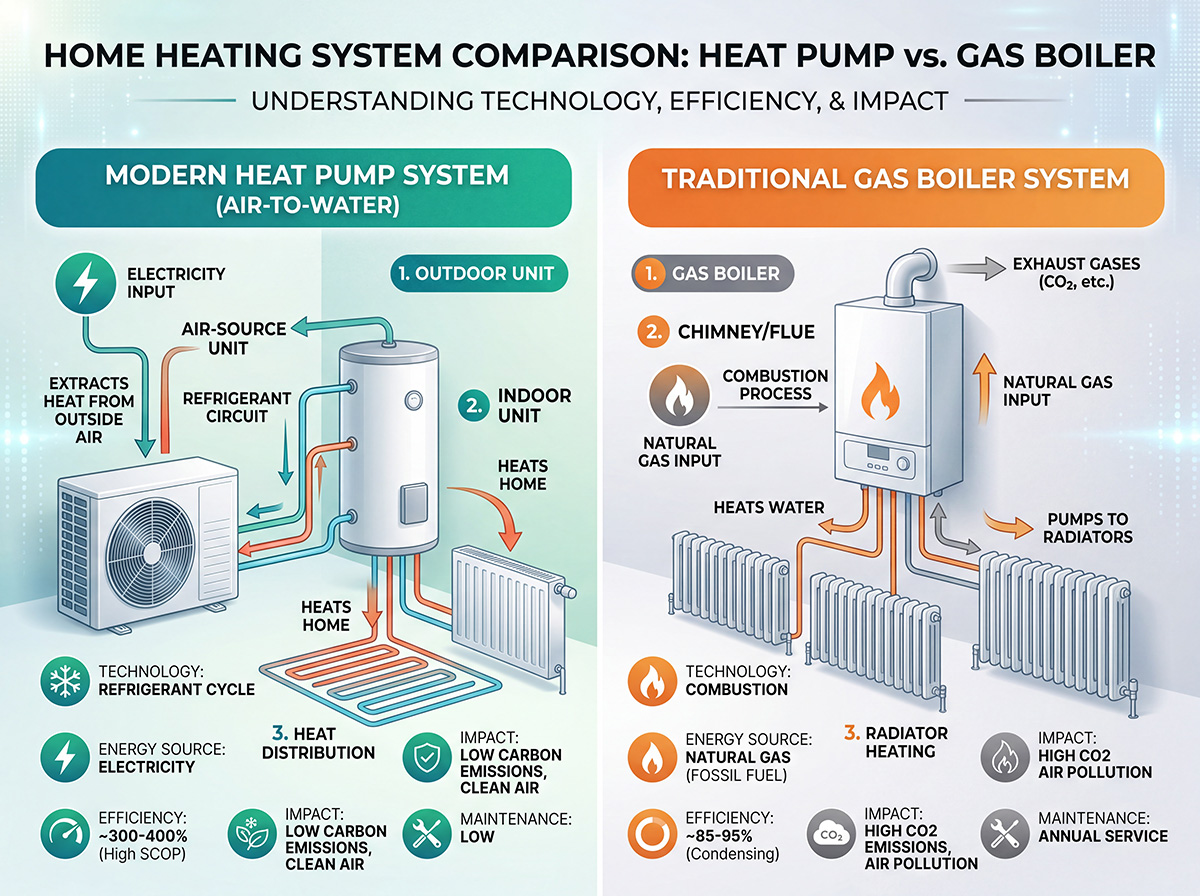
What Are You Comparing When You Look at the Price?
The initial quote for a boiler can appear considerably lower because the existing heating system may already have been designed around one.
The pipework is there. The radiators are already installed. The hot water arrangement may remain unchanged. In a relatively straightforward replacement, the installer may therefore be changing the boiler without redesigning the complete system.
That does not mean every boiler replacement is simple or inexpensive.
Existing pipework may need attention. The flue may need changing. Controls might require upgrading. Radiators may need replacing, and the system may need cleaning or balancing.
These additional costs can change the final figure.
A heat pump project starts from a different point.
Instead of asking only what heat source should replace the boiler, the installer should ask whether the existing heating system is suitable for the way a heat pump operates.
That is why Renewable Heat begins with a detailed Home Assessment before recommending equipment.
The assessment helps build a clearer picture of the property, its heat loss, its existing heating system and the energy demands of the household.
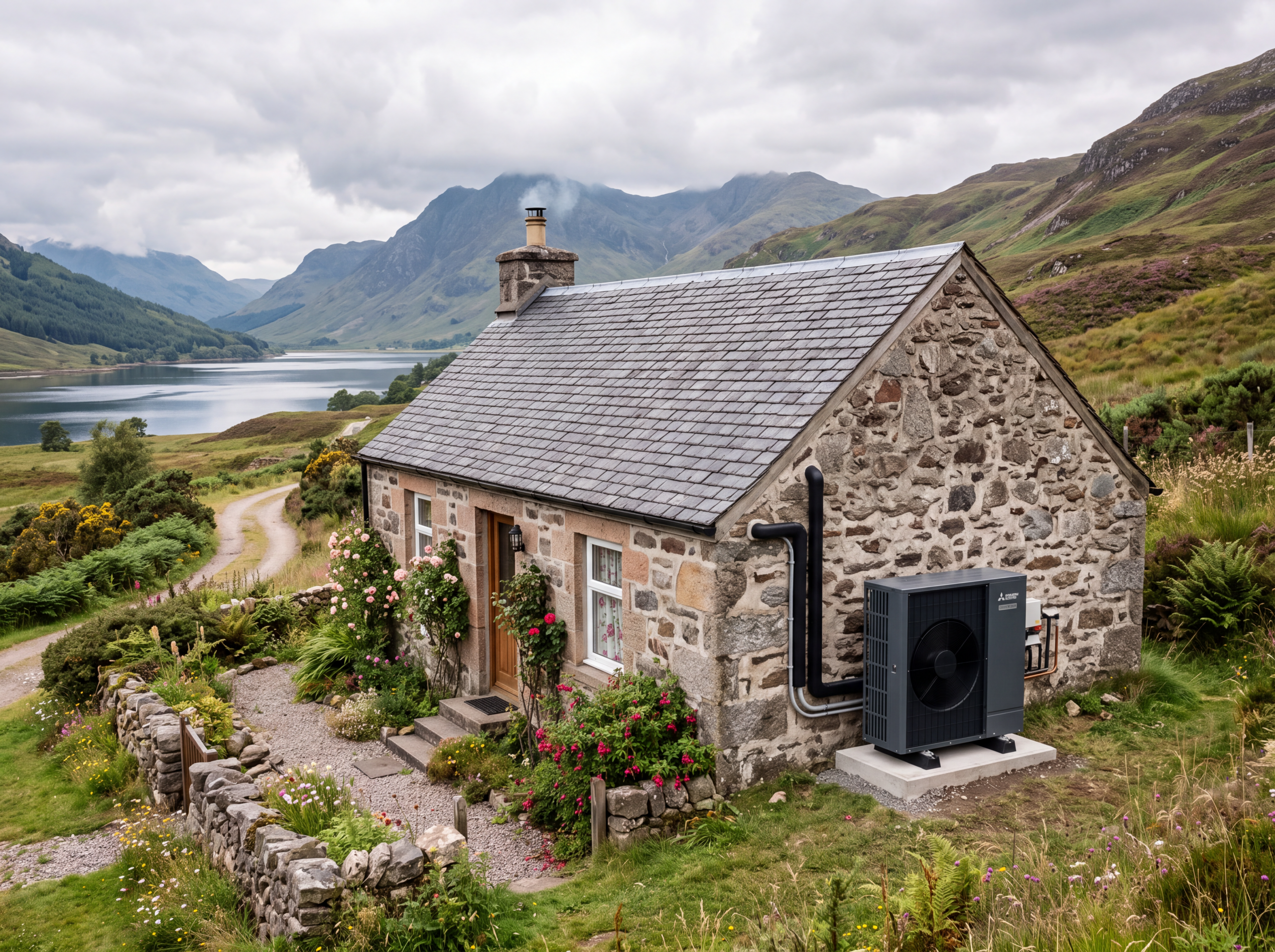
Why Does a Heat Pump Installation Cost More?
The heat pump unit itself is only one part of the installation.
Depending on the property, a complete project could involve:
- The heat pump
- A suitable hot water cylinder
- Radiator upgrades
- Pipework alterations
- Electrical work
- Heating controls
- System design
- Heat loss calculations
- Installation
- Commissioning
- Handover and support
Not every home will need every one of these changes.
Some properties already have radiators and pipework that can work effectively with a heat pump. Others will require more alteration.
This is one reason heat pump quotes can vary significantly from one home to another.
It is also why comparing two quotes solely by looking at the final figure can be misleading.
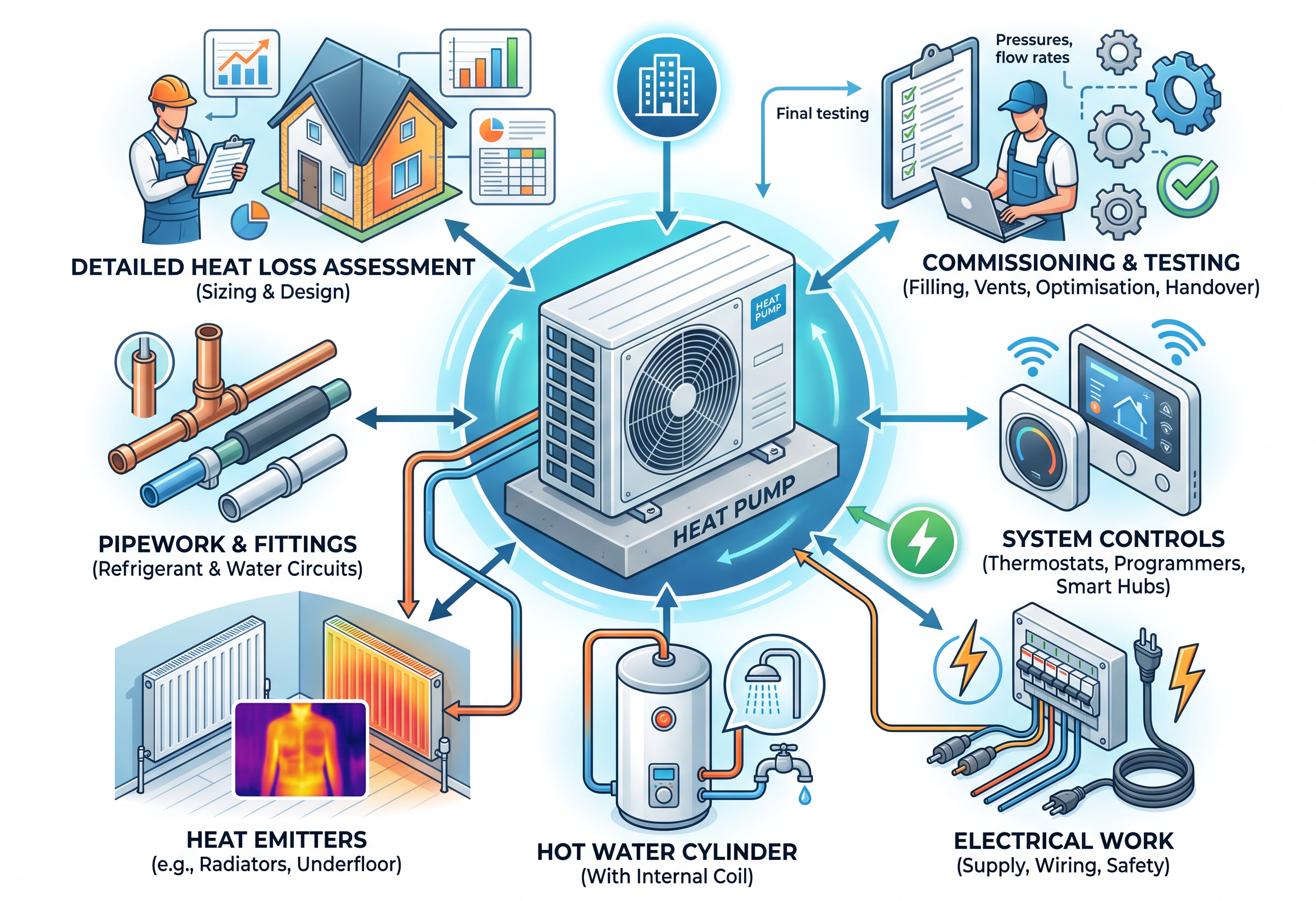
The cost of a heat pump project can reflect much more than the outdoor unit. A complete system needs to be designed around the property.
How Does a Heat Pump Actually Use Energy?
A boiler creates heat by burning fuel.
A heat pump works differently. It moves naturally occurring heat from the air or ground into your home.
An air source heat pump collects heat from the outside air, while a ground source heat pump takes heat from the ground.
Electricity powers the process, but the electricity is being used to transfer heat rather than create all of the heat directly.
This is why a heat pump can provide several units of useful heat for every unit of electricity it consumes.
However, the performance of a heat pump depends heavily on the system around it.
Radiator sizing, flow temperatures, controls, insulation and the quality of the design can all affect how efficiently the system operates.
The Energy Saving Trust also highlights radiator sizing, heating controls and electricity tariffs as important factors when considering heat pump running costs.
So while efficiency figures are useful, homeowners should be cautious about any quote that promises a particular running cost or saving without first assessing the property.
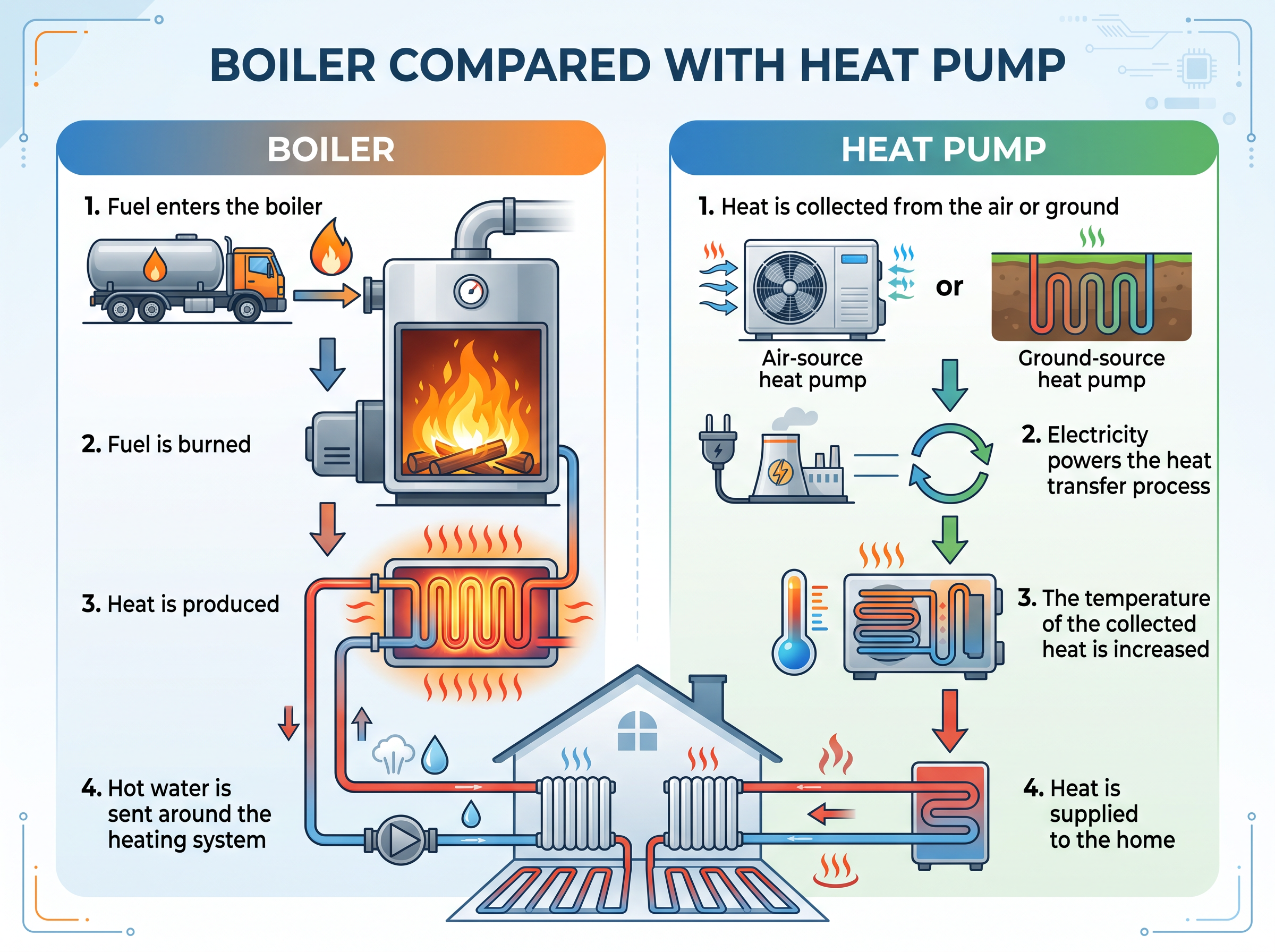
Boilers create heat by burning fuel. Heat pumps transfer heat that already exists in the surrounding environment.
What About the Cost of Running a Heat Pump?
Running costs are understandably one of the biggest concerns for homeowners.
There is no single figure that applies to every property.
The amount you pay will depend on factors including:
- The heat loss of your home
- The size of the heat pump
- The design of the heating system
- Radiator sizes
- Flow temperatures
- Heating controls
- Your electricity tariff
- How much heating and hot water you use
This is why comparing gas and electricity unit prices alone does not tell you what a heat pump will cost to operate.
Heat pumps can provide several units of useful heat for every unit of electricity consumed, but the actual seasonal performance will depend on how the complete system operates across the year.
A well designed system gives the heat pump the best opportunity to operate effectively.
A poorly designed one can make even high quality equipment work harder than it should.
Do All the Radiators Need Replacing?
No.
This is one of the most common misconceptions about moving from a boiler to a heat pump.
Heat pumps generally operate with lower water temperatures than conventional boilers. This means the installer needs to check whether each radiator can provide enough heat to its room at the proposed operating temperature.
Some existing radiators may already be suitable.
Others may need to be larger.
The answer should come from a room by room assessment rather than an assumption that every radiator needs replacing.
In some areas of a home, underfloor heating can also be a good match for a heat pump because it distributes heat across a large surface area and can operate effectively at lower water temperatures.
This can be particularly useful in new homes, extensions and renovation projects.
It is not, however, essential for every heat pump installation.
Can Scottish Funding Reduce the Difference?
Yes, for eligible homeowners, funding can make a significant difference to the upfront cost.
Current Home Energy Scotland information states that qualifying Scottish homeowners can access grant funding of up to £7,500 towards a heat pump, with a higher amount available for qualifying rural and island properties.
An optional interest free loan may also be available.
Funding rules, eligibility and available amounts can change, so homeowners should always check the latest information directly with Home Energy Scotland before making a financial commitment.
The important point when comparing costs is to look at both figures:
The full project cost before funding
and
The amount you may pay after confirmed funding
This provides a much clearer comparison than advertising a low headline figure without explaining the full value of the installation.
Air source or ground source heat pump in Scotland?
Both technologies can be excellent options in Scotland, but they work in slightly different ways. An air source heat pump takes energy from the outside air and is generally easier and less disruptive to install, which is why it is the most common option for many homes.
A ground source heat pump collects energy from the ground using buried pipework or boreholes. Underground temperatures are much more stable throughout the year, so ground source systems are less affected by fluctuations in outdoor air temperature.
The trade-off is that ground source installations require suitable land, access or boreholes and usually involve a greater initial investment. For homes with enough space, particularly larger or rural properties, ground source can offer excellent long-term efficiency.
Heat pump grants in Scotland in 2026
Scotland continues to provide significant financial support for eligible homeowners installing heat pumps through the Home Energy Scotland Grant and Loan. At the time of writing, eligible homeowners can receive up to £7,500 as a grant towards an eligible air, ground or water source heat pump, alongside an optional interest-free loan of up to a further £7,500.
Qualifying rural and island households may also be eligible for an additional £1,500 rural uplift to the heat pump grant. That means an eligible rural household could potentially receive up to £9,000 as a grant plus £7,500 through an optional interest-free loan, giving total potential heat pump support of up to £16,500.
You do not need to receive benefits to qualify for the standard Home Energy Scotland Grant and Loan, although the scheme does have eligibility criteria. The property normally needs to be your main home, eligible heat pumps must provide the whole-house heating and hot water requirements, and qualifying installations must use an MCS-certified installer and eligible equipment. Funding is also subject to the scheme’s current terms and availability.
Heat Pump Funding in Scotland
Eligible homeowners may currently be able to access:
Up to £7,500 heat pump grant funding
Additional support for qualifying rural and island homes

You Do Not Necessarily Need to Change Everything at Once
Another concern is that switching to a heat pump means carrying out a complete home renovation at the same time.
It does not.
The first priority is making sure the heating system can work properly.
That might mean changing selected radiators, improving some pipework or installing a suitable cylinder.
Other improvements can be planned for later.
For example, you may decide to improve insulation as part of future renovation work. You might install underfloor heating when extending the property.
Solar panels and battery storage can also be added later.
The important thing is that these future plans are considered when the original system is designed.
What About Solar PV and Battery Storage?
You do not need solar panels or a battery in order to install a heat pump. But the technologies can work well together as part of a wider home energy system.
A heat pump uses electricity for heating and hot water.
Solar PV can generate electricity at the property, while battery storage can store surplus electricity for later use.
Depending on the electricity tariff and system configuration, a battery can also potentially charge when electricity is less expensive and provide stored energy when grid electricity costs more.
Renewable Heat can design a heat pump, solar and battery system around the needs of the property.
But there is no requirement to install everything at once.
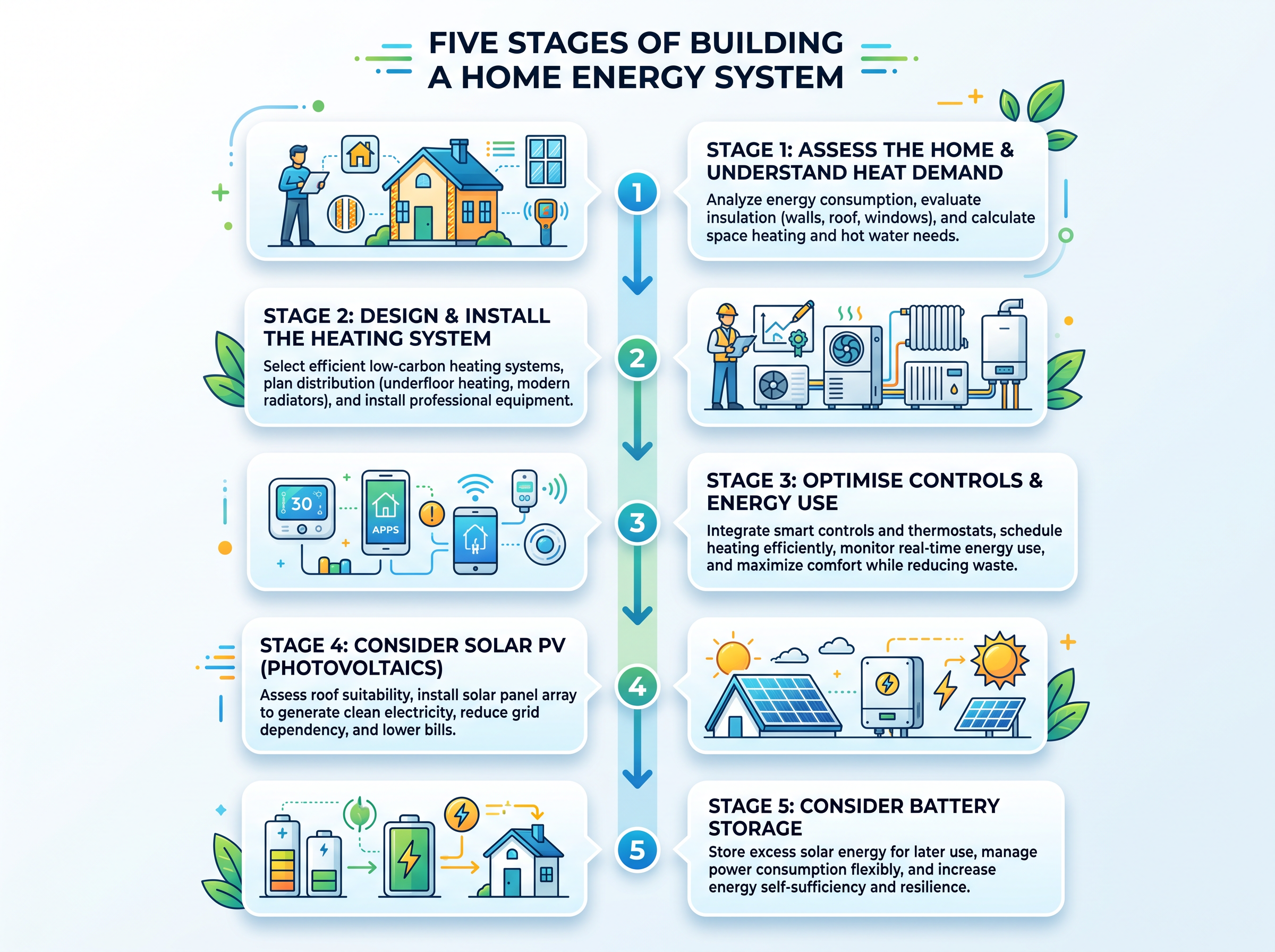
Home energy improvements can be planned in stages. You do not have to complete every upgrade at the same time.
What Does Independent Guidance Say About Heat Pump Costs?
Independent sources also make clear that heat pump costs depend on the work required in the property.
Home Energy Scotland currently gives a typical guide cost of around £13,000 for an air to water heat pump, based on historic applicant invoices with inflation adjustments. It also explains that actual costs depend on the heat pump size and additional work such as pipework, radiator upgrades and a new hot water cylinder.
That figure should be treated as a broad guide rather than a quote for an individual home.
Some properties will cost less. More involved installations can cost considerably more.
This is why the most useful figure is the one produced after your property and heating requirements have been properly assessed.
The Cheapest Quote Is Not Always the Best Value
It can be tempting to compare heat pump installers by looking for the lowest figure.
But make sure you are comparing the same scope of work.
Ask whether the quote includes:
- A detailed heat loss assessment
- Correct system sizing
- Necessary radiator upgrades
- A suitable hot water cylinder
- Electrical work
- Controls
- Commissioning
- Handover
- Support after installation
If one quotation is considerably lower than another, ask what is different.
The saving may come from genuine differences in equipment or design.
Or it may simply be because work that another installer considers necessary has not been included.
A good installer should be able to explain the price clearly.
Think Beyond Installation Day
The decision between a boiler and a heat pump is not only about what you spend today.
It is also about how you want to heat and power your home over the coming years.
A heat pump can form the foundation of a wider move away from fossil fuels, particularly if solar PV, battery storage or other electrical technologies are part of your future plans.
It is therefore worth considering the complete life of the system rather than treating the initial installation price as the only measure of value.
Ongoing support matters too.
Renewable Heat provides repairs, servicing and maintenance for home energy systems, including remote monitoring where suitable.
A heating system is something you rely on every day during the colder months. Knowing who will support it after installation should be part of the buying decision.
So, Is a Heat Pump More Expensive Than a Boiler?
Upfront, it often can be.
But that answer on its own does not tell you very much.
A boiler quote and a heat pump quote may represent very different amounts of work.
A properly designed heat pump project can involve assessing and improving the wider heating system, installing new equipment, commissioning it correctly and creating a system that can support the way your home uses energy in the future.
Funding can also change the final amount an eligible Scottish homeowner pays.
The best comparison is therefore not simply:
Boiler price compared with heat pump price
It is:
What does each quotation include, what will the system cost me to use, and which option makes the most sense for my home over the longer term?
Start With Your Home, Not a Headline Price
Every property is different.
That is why Renewable Heat starts by understanding the home before recommending the equipment.
We have more than 20 years of experience designing and installing home energy systems and can help homeowners explore air source heat pumps, ground source heat pumps, underfloor heating, solar PV and battery storage.
A detailed assessment gives you a clearer understanding of what your property needs, what the installation is likely to involve and what it will actually cost.
Call 0330 022 0480 or email info@renewableheat.com to arrange a home assessment and discuss your options.

If you have started researching heat pumps, you have probably come […]
The heating industry is going through one of the biggest changes […]
A heat pump can change how you heat your home.


