
Heat Pump Load Shifting: Cut Costs with a Battery
Installing a heat pump is one part of creating a more efficient home. How you buy and use the electricity that powers it can also make a significant difference to your running costs.
Heat pump load shifting helps you make better use of cheaper electricity by adjusting when your system uses energy or when that electricity is purchased. Combined with battery storage and a suitable electricity tariff, it can reduce the amount you spend on heating while keeping your home comfortable.
For homeowners across Central Scotland, this creates an opportunity to look at heating, electricity generation and storage together. A carefully designed system can make more of your solar electricity, reduce purchases during expensive periods and improve the savings from your home energy investment.
What is tariff shifting?
Load shifting means moving some electricity use from one time of day to another. You might schedule your hot water cylinder to heat during a cheaper tariff period, for example, or run an appliance while your solar panels are generating electricity.
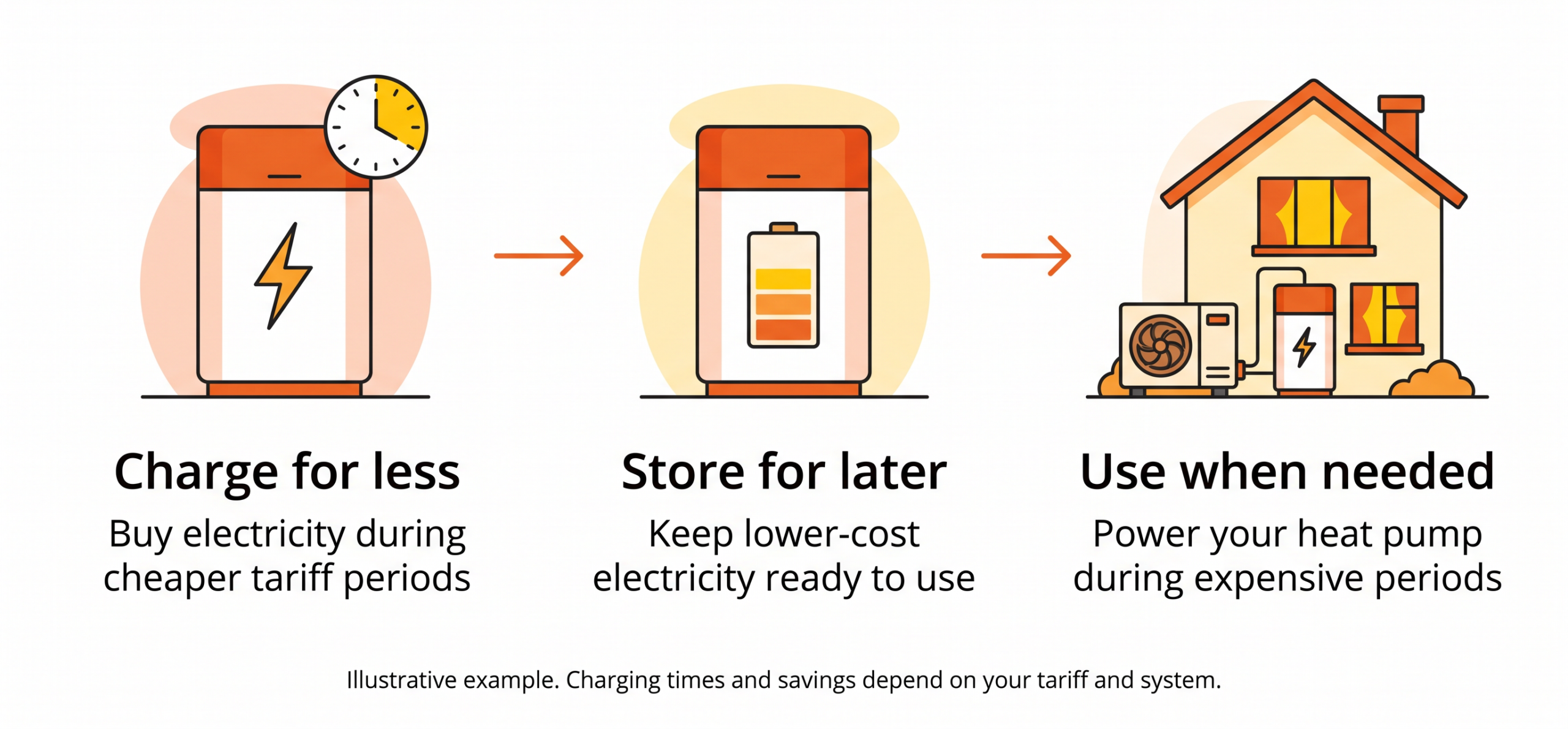
With a heat pump, there are two useful ways to approach this. You can adjust some heating and hot water activity to suit cheaper electricity periods, where your home and system allow. Alternatively, you can charge a battery when electricity is cheaper and use that stored energy to power the heat pump later.
The second approach gives you more flexibility. Your heating can continue operating when your home needs warmth, while some of the electricity it uses has already been bought at a lower price.
| Approach | What changes? | Example |
|---|---|---|
| Shifting heating demand | When the heat pump produces heat | Scheduling hot water heating during a cheaper tariff window |
| Shifting grid electricity purchases | When you buy electricity | Charging a battery off-peak and using it during an expensive period |
| Using solar electricity | How you use electricity generated at home | Running the heat pump during daylight or storing surplus generation for later |
What is heat pump load shifting?
“Tariff shifting” is often used to describe moving electricity purchases into cheaper tariff periods. It is closely linked to load shifting, particularly when a home battery allows you to buy electricity at one time and use it at another.
A time-of-use tariff charges different electricity prices at different times. Some offer predictable cheaper windows each day, while dynamic tariffs have prices that change throughout the day. Tariff switching, meanwhile, simply means moving onto a different tariff.
The Energy Saving Trust’s guide to tariffs for renewable technologies explains why the right choice depends on your combination of heating, solar panels, battery storage and other electricity use. A tariff that suits one household may be expensive for another.
How battery storage can reduce heat pump running costs
A home battery stores electricity for later use. That electricity can come from surplus solar generation or from the grid during a lower-cost tariff period.
For a home with an air source heat pump, the battery can then supply some of the electricity needed for heating, hot water and household appliances when grid prices rise. You still use energy, but reduce the amount purchased at the more expensive rate.
The Energy Saving Trust’s battery storage guidance confirms that batteries can work alongside heat pumps and smart tariffs, including in homes without solar panels. However, storing electricity involves energy losses, which need to be included when estimating savings. Energy Saving Trust
A simple example of the potential saving
Imagine a household has access to electricity costing 12p per kWh during a cheaper period, compared with 30p per kWh during a more expensive period.
For this illustration, assume the battery delivers 90% of the electricity used to charge it.
| Calculation | Illustrative Result |
|---|---|
| Buy 10kWh of electricity at 12p per kWh | £1.20 |
| Electricity available after assumed storage losses | 9kWh |
| Buy the same 9kWh directly at 30p per kWh | £2.70 |
| Difference in electricity cost | £1.50 |
That £1.50 is a saving on the electricity shifted in this example. If the stored electricity powers your heat pump, it reduces the electricity cost associated with producing that heat.
These are illustrative figures, rather than current tariff prices or a household savings forecast. They exclude the cost of installing the battery, degradation and other ownership costs.
Can you shift heating without a battery?
Yes. Some homes can benefit from scheduling hot water production during cheaper electricity periods or making modest changes to space heating schedules.
However, heat pumps generally perform well with longer running periods and relatively low flow temperatures. Turning the heating off for hours and then demanding a rapid temperature increase can undermine efficiency and comfort. The Energy Saving Trust’s advice on running a heat pump efficiently recommends steady operation and carefully adjusted controls. Energy Saving Trust
Any schedule should therefore reflect how quickly your property loses heat, your household routine and the heating system’s response. Hot water programming must also retain the system’s required hygiene settings.
A battery offers another option: shifting electricity purchases while allowing the heat pump to maintain its normal heating pattern. Whether this produces worthwhile savings depends on the tariff and the system.
Which electricity tariffs work with heat pumps and batteries?
Dedicated heat pump tariffs and dynamic electricity tariffs are both worth comparing. The important question is how much your household would pay across the whole day and year, including any expensive periods and standing charges.
For example, Cosy Octopus currently offers three cheaper electricity windows each day, alongside a higher-priced period between 4pm and 7pm. It requires a compatible working smart meter and eligible electric heating. Check the supplier’s current rates and conditions before switching. Octopus Energy
A battery may help reduce purchases during an expensive window, but only while it has sufficient charge and power output. If it runs out while your heat pump, oven and other appliances are operating, your home will buy the remaining electricity at the applicable grid rate.
Solar owners should also compare export payments. A low import rate needs to be considered alongside what you receive for electricity sent back to the grid.
Where do solar panels fit in?
Solar panels add another source of electricity to the system. During daylight, generation can supply household demand, including the heat pump, while surplus electricity can charge a battery for later use.
This gives the battery two possible roles: retaining solar generation and storing cheaper grid electricity. Renewable Heat’s battery storage systems in Central Scotland can be designed around solar generation, tariff periods and wider household demand. Renewable Heat
The balance changes through the year. During Scotland’s shorter winter days, your system design should account for lower solar generation alongside higher heating demand. A battery stores energy between charging opportunities; it cannot carry summer solar generation through to winter.
For homeowners considering all three technologies, our whole home energy solutions bring heat pumps, solar PV and battery storage into a coordinated plan.
Does battery storage improve payback?
Battery storage can increase bill savings by reducing expensive electricity purchases and making more use of solar generation. Higher savings can improve the financial return from a system, but adding a battery also increases the upfront investment.
The useful comparison is between your proposed system with and without the battery. How much extra does storage cost, and how much additional saving is it expected to deliver?
The Energy Saving Trust’s research into technology and tariff combinations found that batteries can be more financially attractive in homes with higher electricity demand, including those with heat pumps. It also found that additional bill savings do not always recover the battery’s cost within its expected lifetime.
A realistic assessment should account for installation costs, usable capacity, storage losses, changing tariffs, battery degradation and warranty terms. For solar households, it should also include the export income you give up when storing electricity.
Lower bills and faster payback are related, but they are not automatically the same outcome. The figures need to support the investment.
Getting the system size and controls right
Battery capacity tells you how much electricity can be stored. Its power output tells you how much it can supply at once. Both matter when a heat pump shares the battery with cooking, lighting and other household demand.
The system also needs enough charging capability to make useful use of the cheaper tariff windows. A large battery offers limited benefit if it cannot recharge sufficiently before the next expensive period, or if your household rarely uses the energy it stores.
Renewable Heat assesses household consumption, solar generation and future requirements before recommending battery storage. Its approach includes integrating the battery with your tariff, heat pump and wider home energy system.
Could heat pump load shifting work for your home?
If you already have a heat pump, reviewing your electricity tariff and controls is a useful starting point. If you are planning a new installation, considering battery storage and solar at the design stage can help you understand the costs and benefits together.
At Renewable Heat, we start by looking at your property and how you use energy. Our home assessment service helps establish the right approach to your heating and wider energy needs.
Whether you want to optimise an existing heat pump or explore a combined system, we can help you understand where load shifting could fit and which improvements deserve priority.

COP tells you how efficiently a heat pump works under a particular set […]

If your boiler is nearing the end of its life, you have more […]
A heat pump uses electricity to provide heating and hot water. Solar panels […]


