Whole Home Retrofit Planning in Scotland | Renewable Heat
Making your home warmer, more efficient and less reliant on fossil fuels is rarely about choosing one product.
You might be considering a heat pump.
Perhaps solar PV or battery storage is part of your longer term plan.
Or maybe your first priority should actually be insulation, ventilation or improvements to the existing heating system.
The challenge is knowing what your home needs and, just as importantly, what order those improvements should happen in.
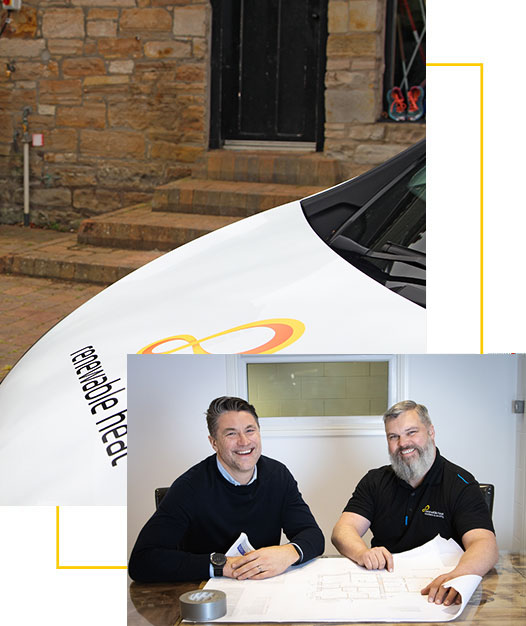
That is why Renewable Heat is working with Loco Home Retrofit CIC.
Loco Home Retrofit provides independent whole home advice and planning, helping homeowners understand their property and create a practical roadmap for improving it.
Renewable Heat can then provide the technical expertise to design and install heating and energy systems that fit within that wider plan.
Together, the aim is to give homeowners a clearer route from asking “What does my home need?” to actually getting the appropriate work completed.
Smarter Retrofit Starts With a Plan: Our Partnership With Loco Home Retrofit
It is easy to begin with the technology.
You might have read about heat pumps and decided you want one.
You might be interested in solar panels because you want to generate more of your own electricity.
You may be considering battery storage to give you more control over when that electricity is used.
All of these technologies can have a role.
But before deciding what to install, it can be useful to understand the building itself.
Questions might include:
- How much heat does the property lose?
- Could the insulation be improved?
- Is the ventilation appropriate?
- Are there repairs that should be completed first?
- Is the existing heating system suitable?
- Which radiators can remain?
- What are the household’s hot water requirements?
- Could reducing heat loss affect the size of heating system required?
- Are solar PV or battery storage part of the longer term plan?
Looking at these questions together can help prevent individual improvements from being treated as completely separate projects.
Why Should Retrofit Start With a Plan?
Imagine installing a new heating system and then significantly improving the insulation a short time later.
The amount of heat the property requires may have changed.
Or imagine carrying out extensive work to improve airtightness without considering how the property will be ventilated afterwards.
Individual improvements can affect one another.
This is why the order matters.
A planned approach allows you to consider what should happen first, what can happen later and how each stage affects the next.
In some properties, building improvements may make sense before the heating system is changed.
In others, certain improvements may be unnecessary or impractical.
The answer depends on the home.
Why Does the Order of Home Improvements Matter?
Whole home retrofit means looking at the property as a complete system.
Heating is connected to insulation.
Insulation can affect ventilation requirements.
Heat loss influences heating system design.
Electricity consumption can influence decisions around solar PV and battery storage.
The people living in the property matter too.
A family with several bathrooms and high hot water demand has different requirements from a smaller household.
A home occupied throughout the day may be used differently from one that is empty during working hours.
A good retrofit plan therefore considers both the building and the people using it.
The objective is not necessarily to renovate everything.
It is to understand how the different parts of the home interact so improvements can be planned properly.
What Is a Whole Home Retrofit?
Loco Home Retrofit CIC is a not for profit cooperative that provides independent advice to homeowners considering energy and retrofit improvements.
Its role is different from that of an installer.
Rather than beginning with a particular technology, Loco Home Retrofit can look at the property more broadly and help the homeowner understand what improvements may be appropriate.
Its Whole Home Plan can create a roadmap for improving the property over time.
Depending on the home, this can consider:
- Repairs and maintenance
- Insulation
- Airtightness
- Ventilation
- Indoor air quality
- Heating system readiness
- The order of future improvements
- Budget considerations
- Potential funding options
This allows homeowners to think beyond a single purchase and consider where they ultimately want the property to be.
What Does Loco Home Retrofit Do?
One of the important aspects of Loco Home Retrofit’s role is that its advice is independent.
The starting point is the needs of the property and homeowner rather than the sale of a particular heating or energy technology.
That distinction can be valuable when you are not yet sure what your home needs.
You might begin the process thinking a heat pump should be your first improvement.
After assessing the property, it may make more sense to complete another piece of work first.
Alternatively, the assessment may confirm that the home is ready to move ahead with heating improvements.
Either outcome gives you more information before making a significant investment.
Why Is Independent Advice Useful?
Whole home retrofit is supported by established industry principles.
One important framework is PAS 2035, which provides a structured approach to improving existing homes.
The standard encourages retrofit projects to consider the property as a whole and to think about how individual measures interact.
That matters because changing one part of a building can sometimes have consequences elsewhere.
For example, improving airtightness can reduce unwanted heat loss, but ventilation still needs to be considered so that moisture and indoor air quality are properly managed.
The goal is to improve the property without creating unintended problems.
Homeowners who want to understand more about domestic retrofit standards can find further information through TrustMark and the British Standards Institution.
What Is PAS 2035?
Once you understand what the property needs, the next stage is turning that plan into practical improvements.
This is where Renewable Heat comes in.
We design and install home heating and energy systems including:
- Air source heat pumps
- Ground source heat pumps
- Underfloor heating
- Solar PV
- Battery storage
- Heating system improvements
If a heat pump forms part of your Whole Home Plan, Renewable Heat can assess the heating requirements in more detail and design the system around the property.
That can include calculating heat loss, assessing radiators, reviewing pipework, considering hot water requirements, selecting the appropriate heat pump and designing the controls.
Our Home Assessment helps establish what the heating system itself requires before installation begins.
Where Does Renewable Heat Fit Into the Process?
Heat loss is fundamental to heating system design.
Every property loses heat through its walls, windows, roof, floor and ventilation.
The amount lost depends on the construction of the home and the improvements that have already been made.
If insulation is improved, the amount of heat required to maintain a comfortable indoor temperature may decrease.
That can influence the heating system.
This is why it can make sense to understand planned building improvements before finalising the heat pump design.
An air source heat pump or ground source heat pump should be selected around the heating requirements of the property rather than simply matching the boiler it replaces.
Why Does Heat Loss Matter?
No.
This is an important misconception.
A heat pump does not require a perfectly insulated home.
Heat pumps can be installed successfully in many existing properties.
What matters is understanding how much heat the property loses and designing the heating system accordingly.
There may be sensible insulation improvements that can reduce heat demand and improve comfort.
There may also be properties where particular insulation measures are difficult, inappropriate or simply not a priority.
The answer should come from understanding the building rather than applying the same checklist to every home.
This is another advantage of starting with a whole home approach.
Does a Home Need to Be Perfectly Insulated Before Installing a Heat Pump?
The building is only one side of the retrofit.
The heating system needs to be considered too.
Heat pumps generally operate at lower water temperatures than traditional boilers.
This means the existing radiators need to be assessed to establish whether they can provide enough heat at the proposed operating temperature.
Some may already be suitable.
Others may need to be larger.
Existing pipework also needs to be considered.
Hot water requirements need to be understood, particularly in homes moving away from a combi boiler.
If renovation work is planned, underfloor heating may also be worth considering in suitable areas.
The goal is not to replace everything.
It is to create a heating system in which all of the components work together effectively.
What About Radiators and the Existing Heating System?
A whole home plan does not mean carrying out a complete renovation immediately.
In fact, one of its biggest advantages is that it can help you decide what can wait.
You might begin with essential repairs and insulation.
The next stage might be the heating system.
Solar PV could come later.
Battery storage might be something you consider several years afterwards.
Having a plan means those decisions do not have to be made in isolation.
You Do Not Have to Do Everything at Once
A heat pump does not require solar panels or battery storage.
But they can form part of a wider home energy system.
Solar PV generates electricity at the property.
Battery storage allows electricity to be stored for later use.
A heat pump uses electricity to provide heating and hot water.
For some homeowners, bringing these technologies together can provide greater control over how electricity is generated, stored and used.
Renewable Heat can design integrated heat pump, solar and battery systems where this approach is suitable.
Again, everything does not need to be installed at once.
Planning ahead simply means future additions can be considered when earlier decisions are made.
Where Do Solar PV and Battery Storage Fit?
The process can be thought of as two complementary areas of expertise.
Loco Home Retrofit
Provides independent whole home advice.
Helps identify priorities.
Considers building improvements.
Helps establish the order in which work could be completed.
Creates a longer term Whole Home Plan.
Renewable Heat
Assesses the heating and energy requirements in detail.
Designs the appropriate system.
Installs heating and energy technologies.
Commissions the completed system.
Provides ongoing support and maintenance.
The two roles are different, but they complement one another.
How Does the Partnership Work in Practice?
Without a wider plan, homeowners can end up making individual decisions that later need to be reconsidered.
For example, renovation work might be completed without considering future underfloor heating.
A heating system could be changed shortly before major insulation improvements.
Electrical work might be completed without considering future solar PV or battery storage.
Planning does not eliminate every unknown.
Homes change. Budgets change. Technology changes.
But having a direction can reduce the likelihood of completing work that makes a later improvement unnecessarily difficult.
It also gives homeowners more confidence about what needs to happen now and what can reasonably wait.
Why Can Planning Ahead Save Unnecessary Work?
That is completely normal.
A retrofit plan should not assume unlimited money.
For many households, improvements will happen over several years.
The purpose of planning is to help prioritise.
You can identify work that is urgent.
You can identify improvements that could have the greatest effect on comfort or energy demand.
You can understand what needs to happen before another project begins.
And you can identify improvements that can wait until the budget allows.
A good plan gives you a route forward without requiring you to complete the entire journey immediately.
What If My Budget Does Not Allow Everything?
There is no single combination of technologies that is right for every property.
Some homes may benefit from insulation improvements before changing the heating.
Some may already be ready for a heat pump.
Some homeowners may want solar PV immediately.
Others may decide battery storage makes more sense later.
The important thing is knowing why you are making each decision and how it fits into the bigger picture.
Renewable Heat has more than 20 years of experience designing and installing home energy systems, including air source heat pumps, ground source heat pumps, underfloor heating, solar PV and battery storage.
Loco Home Retrofit brings independent whole home planning and retrofit advice.
Together, the aim is to help homeowners understand their property first and then make informed decisions about what comes next.
If you are considering wider improvements to your home, start by exploring a Whole Home Plan with Loco Home Retrofit.
Once you understand what your home needs, Renewable Heat can help turn the relevant heating and energy recommendations into a practical system designed around your property.
Start With the Home, Then Choose the Technology

If you have started researching heat pumps, you have probably come […]
The heating industry is going through one of the biggest changes […]
A heat pump can change how you heat your home.