
What Does an Air Source Heat Pump Installation Really Cost?
One of the first questions people ask about an air source heat pump is straightforward.
How much will it cost?
The answer is not always as simple.
You may have seen adverts suggesting that a heat pump can be installed for only a few thousand pounds.In some circumstances, grant funding can significantly reduce the amount an eligible homeowner ultimately pays. But that does not mean the complete installation only costs a few thousand pounds.
For many homes, a complete Renewable Heat air source heat pump project can cost around £20,000 or more before available funding is applied.
That figure can initially seem high, particularly when it is compared with the price of replacing a boiler. But an air source heat pump installation is not simply about putting a new unit outside your home. It can involve assessing and designing the complete heating system so that the heat pump, radiators, hot water, pipework and controls all work together effectively.
Understanding what is actually included in the price makes it much easier to compare quotations properly.
Why Can Air Source Heat Pump Quotes Vary So Much?
Every home has different heating requirements. Two properties of a similar size can require very different systems. One might be well insulated with suitable radiators and modern pipework. Another could have older radiators, restricted pipework, higher heat loss and greater hot water requirements.
Those differences affect the design and ultimately the cost.
Important factors include:
- Property size
- Construction type
- Insulation
- Windows and glazing
- Room by room heat loss
- Existing radiators
- Existing pipework
- Hot water requirements
- Outdoor space
- Electrical requirements
- Heating controls
- The size of heat pump required
This is why a reliable price normally requires more than a quick estimate based on the number of bedrooms or the floor area of the property.
At Renewable Heat, the process begins with a detailed Home Assessment so we can understand what the property actually requires.
What Is Included in a Complete Air Source Heat Pump Installation?
The outdoor heat pump is only one part of the project.
Depending on your property, a complete installation could include:
- An air source heat pump correctly sized for the home
- A suitable hot water cylinder
- New or upgraded radiators where required
- Pipework alterations
- Heating controls
- Weather compensation
- Electrical work
- Outdoor unit installation
- System design
- Heat loss calculations
- Installation
- Commissioning
- Homeowner handover
- Ongoing support
Not every property will require all of these changes.
For example, some existing radiators may already be suitable. Other homes may need several radiator upgrades.
The important thing is that these decisions are based on what the property needs rather than assumptions.
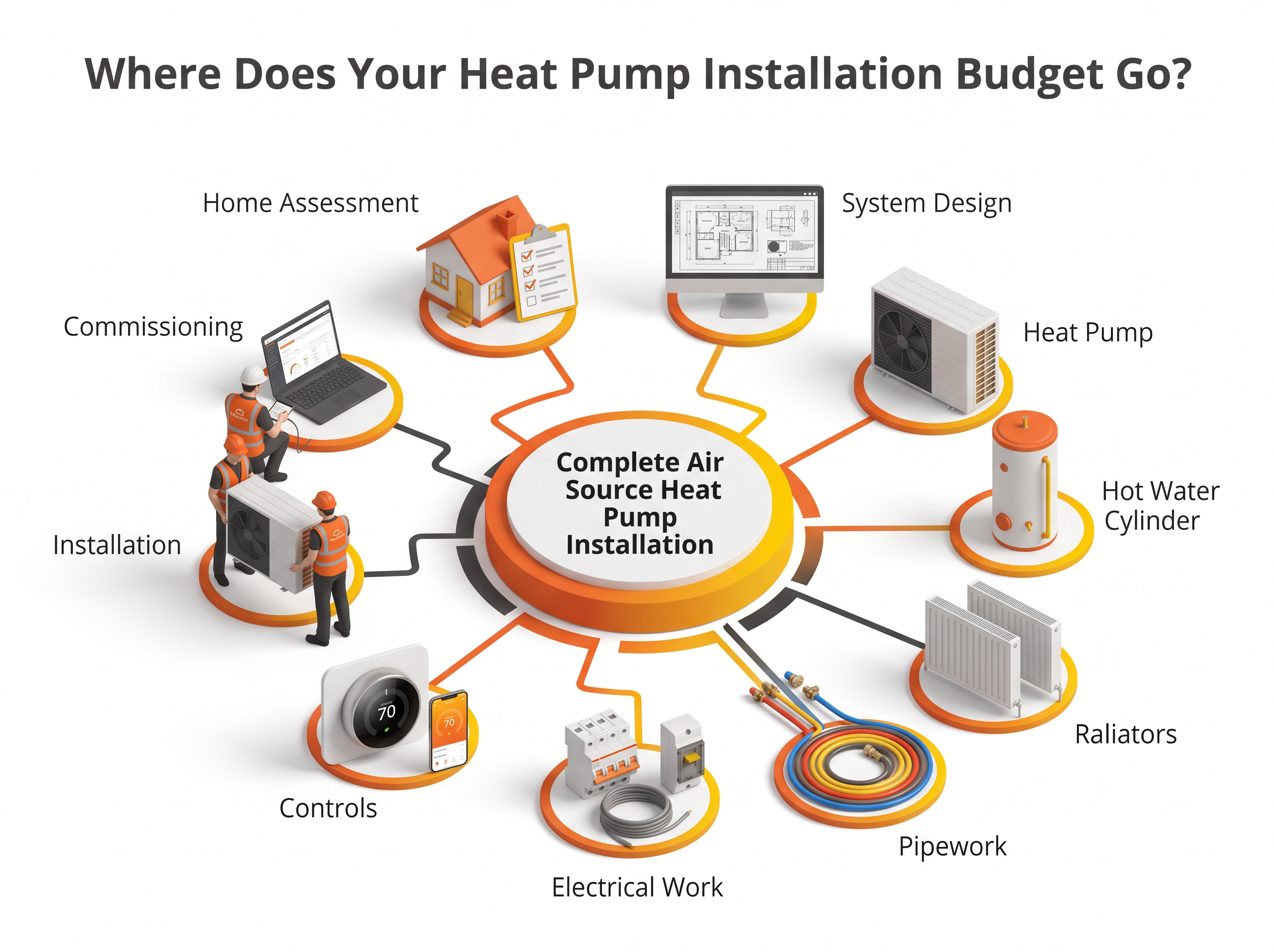
The cost of a complete heat pump installation reflects the heating system as a whole, not simply the outdoor unit.
Why Does Heat Loss Matter to the Cost?
Before selecting a heat pump, the installer needs to understand how much heat your home requires. This involves calculating heat loss.
Heat naturally escapes through areas such as walls, windows, roofs, floors and ventilation. How quickly this happens depends on the construction and insulation of the property.
A room by room heat loss calculation helps determine how much heat needs to be supplied to maintain the required indoor temperature when outdoor conditions are cold.
This information affects the size of the heat pump and the output required from the radiators or underfloor heating.
Industry guidance from MCS places considerable importance on accurate heat loss calculations and appropriate heat pump sizing.
Simply replacing a boiler with a heat pump of a similar rated output is not a reliable way to design the system.
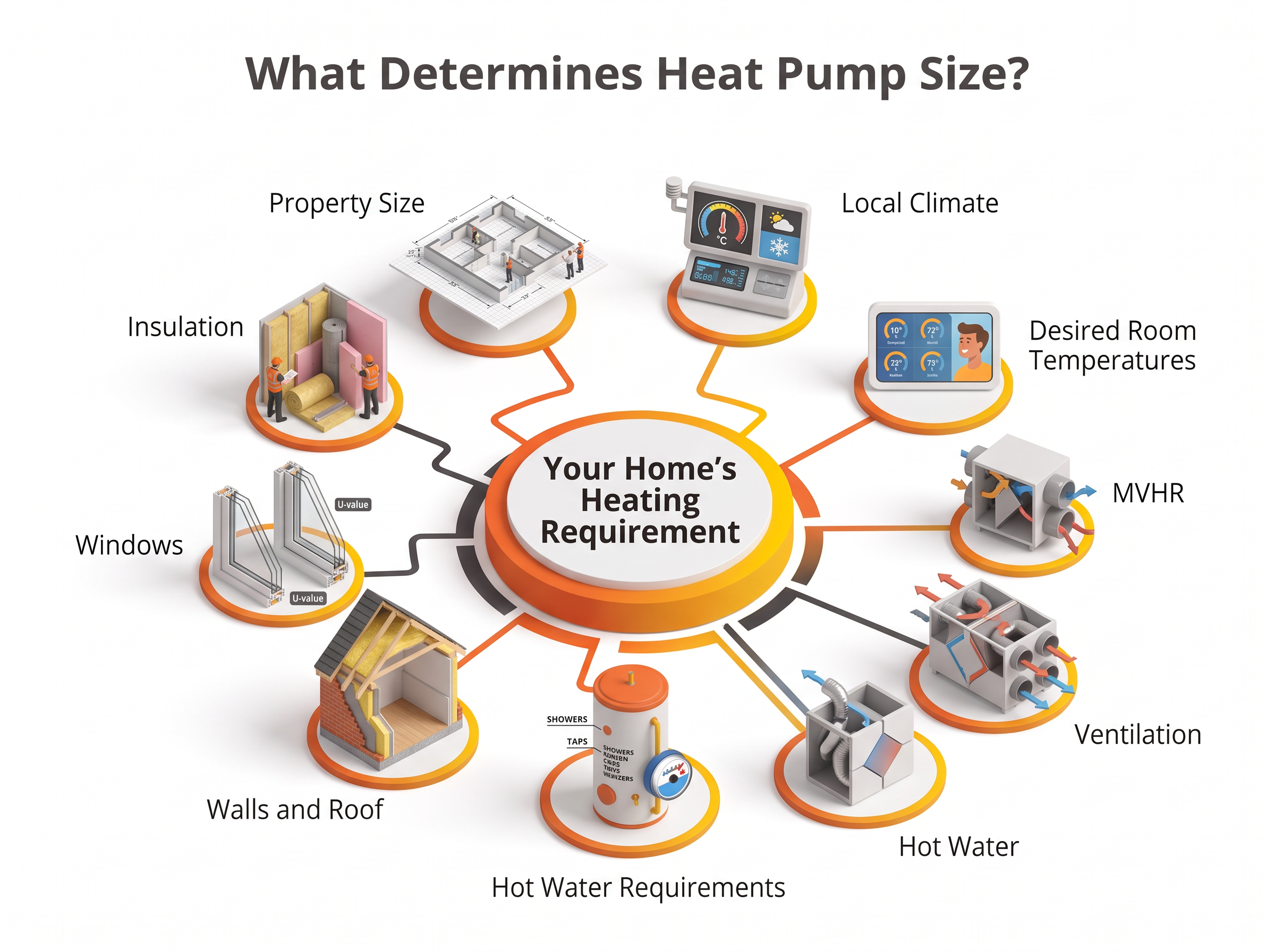
Heat pump sizing should be based on the heating requirements of the property rather than simply matching the size of the previous boiler.
Why Might Radiators Need to Be Changed?
Air source heat pumps generally operate at lower water temperatures than traditional boilers. This means the radiators need to provide enough heat to the room while operating with cooler water. Some existing radiators may already be large enough. Others may need upgrading. This should be assessed room by room.
You should not automatically be told that every radiator needs replacing.
Equally, you should be cautious if an installer says that none of them need changing without carrying out the appropriate calculations.
The cost of radiator upgrades can therefore vary considerably between properties.
For renovations, extensions and new homes, underfloor heating can also work effectively with heat pumps because it distributes heat across a larger surface area.
But underfloor heating is not a requirement for installing a heat pump.
What About the Hot Water Cylinder?
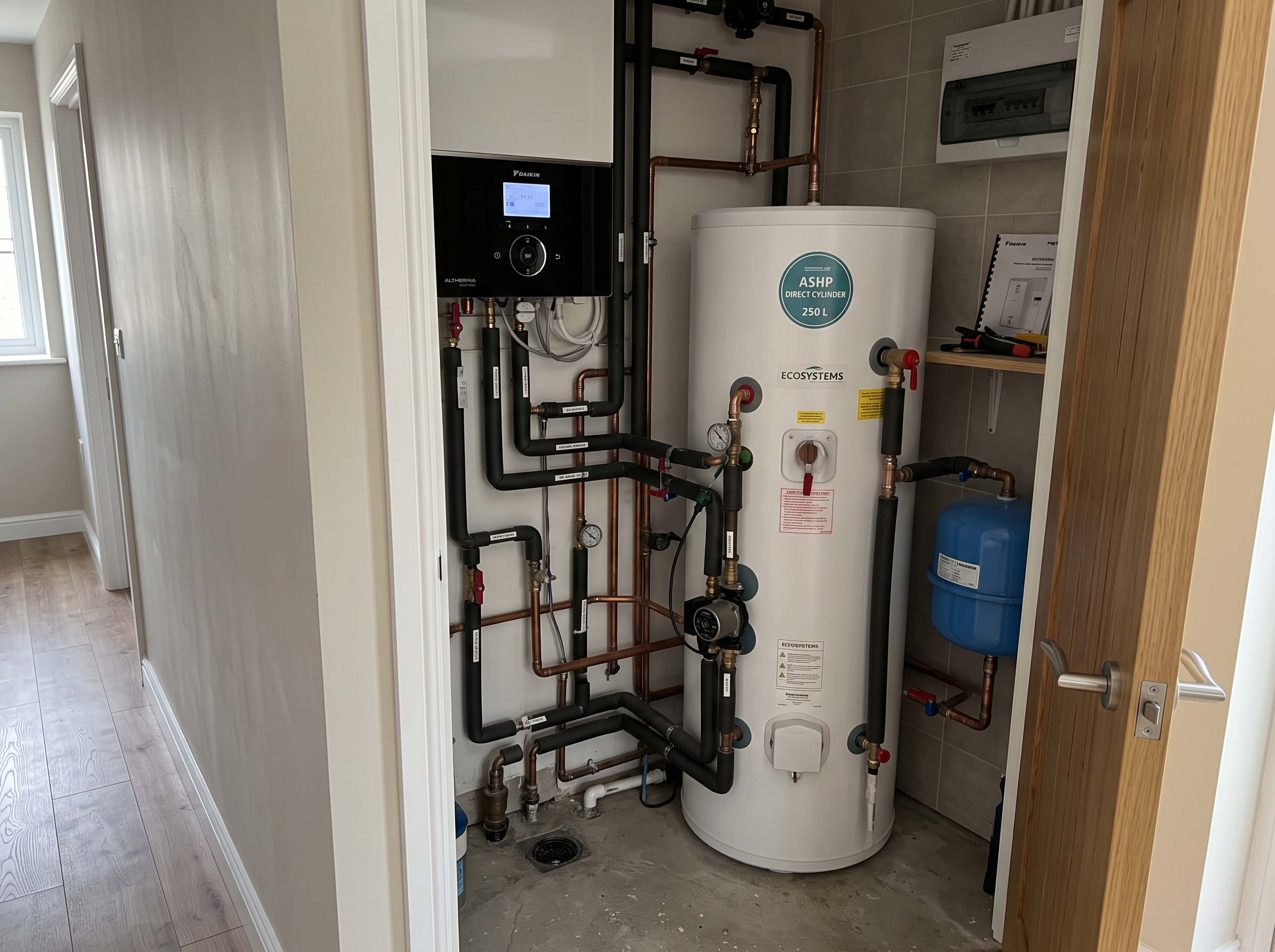
Hot water is another important part of the design. Many homes with combi boilers do not currently have a hot water cylinder. A heat pump installation may therefore require a suitable cylinder to store domestic hot water.
The appropriate cylinder will depend on the household and available space. A property with one bathroom and relatively modest hot water requirements may need a different solution from a larger household with several bathrooms and greater demand.
This is another reason a heat pump quotation should be based on the property rather than a standard package.
Why Is the Cheapest Heat Pump Quote Not Always the Cheapest Installation?
A low headline price can be attractive. But it is important to establish what that figure actually includes. Before comparing quotations, ask whether each installer has included the same work.
For example:
Has a detailed heat loss calculation been completed?
Has the heat pump been sized for the property?
Have the radiators been assessed?
Is a suitable hot water cylinder included?
Are necessary pipework alterations included?
Is electrical work included?
Are heating controls included?
Is commissioning included?
What support is available after installation?
If one quotation is considerably cheaper than another, there may be a perfectly reasonable explanation. But you should understand what that explanation is. Removing necessary work from the original quotation does not make that work unnecessary. It can simply mean you encounter the cost later.
Why Does Good Design Matter So Much?
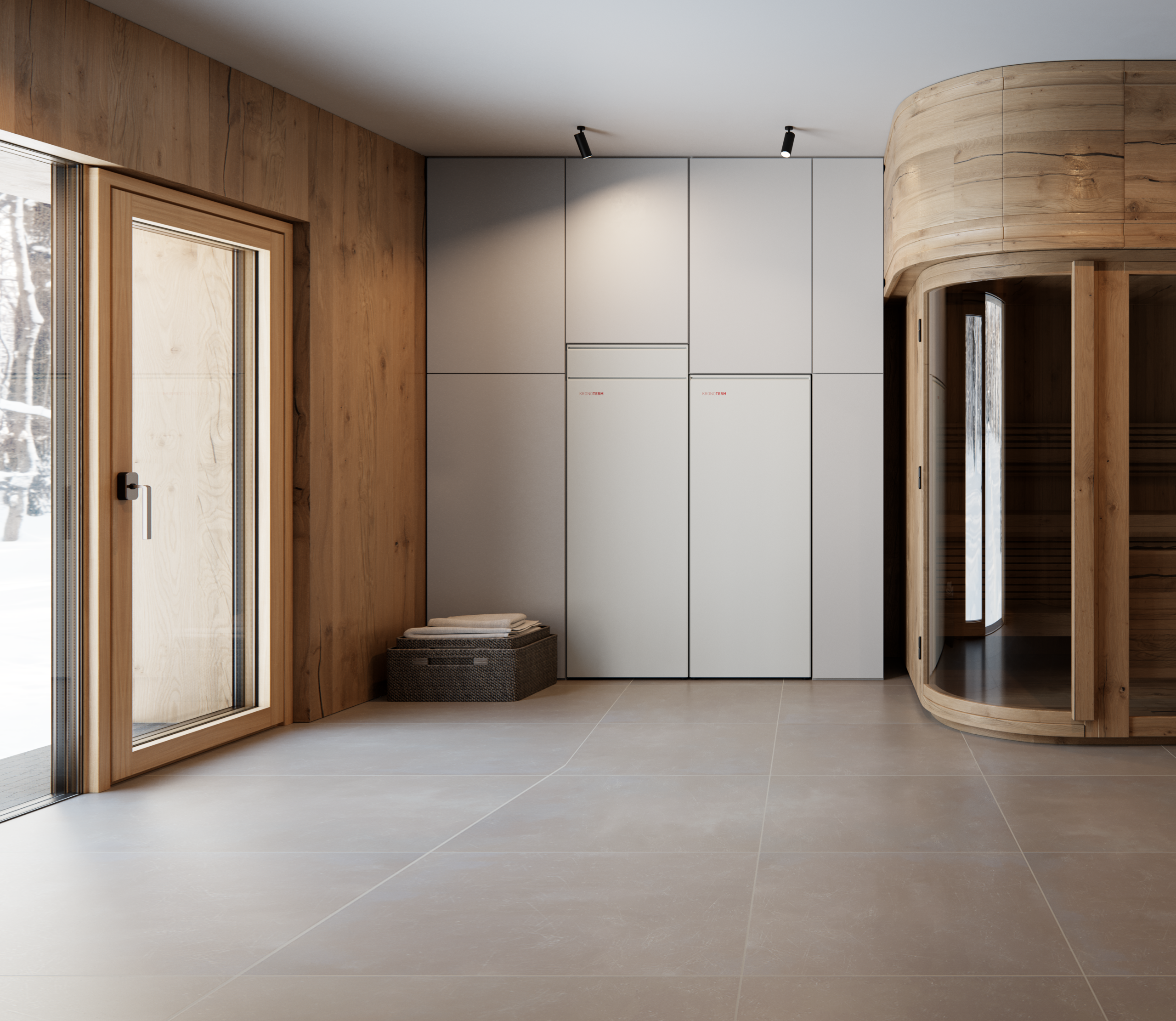
The heat pump itself is important, but the design of the heating system around it is equally important.
A correctly sized heat pump should be able to meet the heating requirements of the property without being unnecessarily large.
The radiators need to provide the required heat at the intended operating temperatures.
The pipework needs to allow sufficient water flow.
The controls need to be configured correctly.
The hot water system needs to meet household demand.
All of these elements affect how the finished installation performs.
Renewable Heat designs heating systems around the individual property rather than treating the heat pump as a standalone appliance.
That is an important part of understanding what you are paying for.
What About Running Costs?
The installation price is only one part of the financial picture. Homeowners understandably also want to know what the heat pump will cost to operate.
There is no single answer.
Running costs depend on factors including:
- The amount of heat your home requires
- Heat pump efficiency
- System design
- Flow temperature
- Hot water consumption
- Heating controls
- Electricity tariff
- Household heating habits
An air source heat pump uses electricity, but it does not operate like a standard electric heater. Instead, it transfers heat from the outside air into the property. This allows a heat pump to provide several units of useful heat for every unit of electricity it consumes.
The Energy Saving Trust provides independent guidance on heat pump efficiency, costs and the factors that influence performance.
However, homeowners should be cautious of guaranteed savings figures. The most useful estimate is one based on the individual property, the proposed system and realistic household energy use.
Do I Need Solar Panels and Battery Storage at the Same Time?
No.
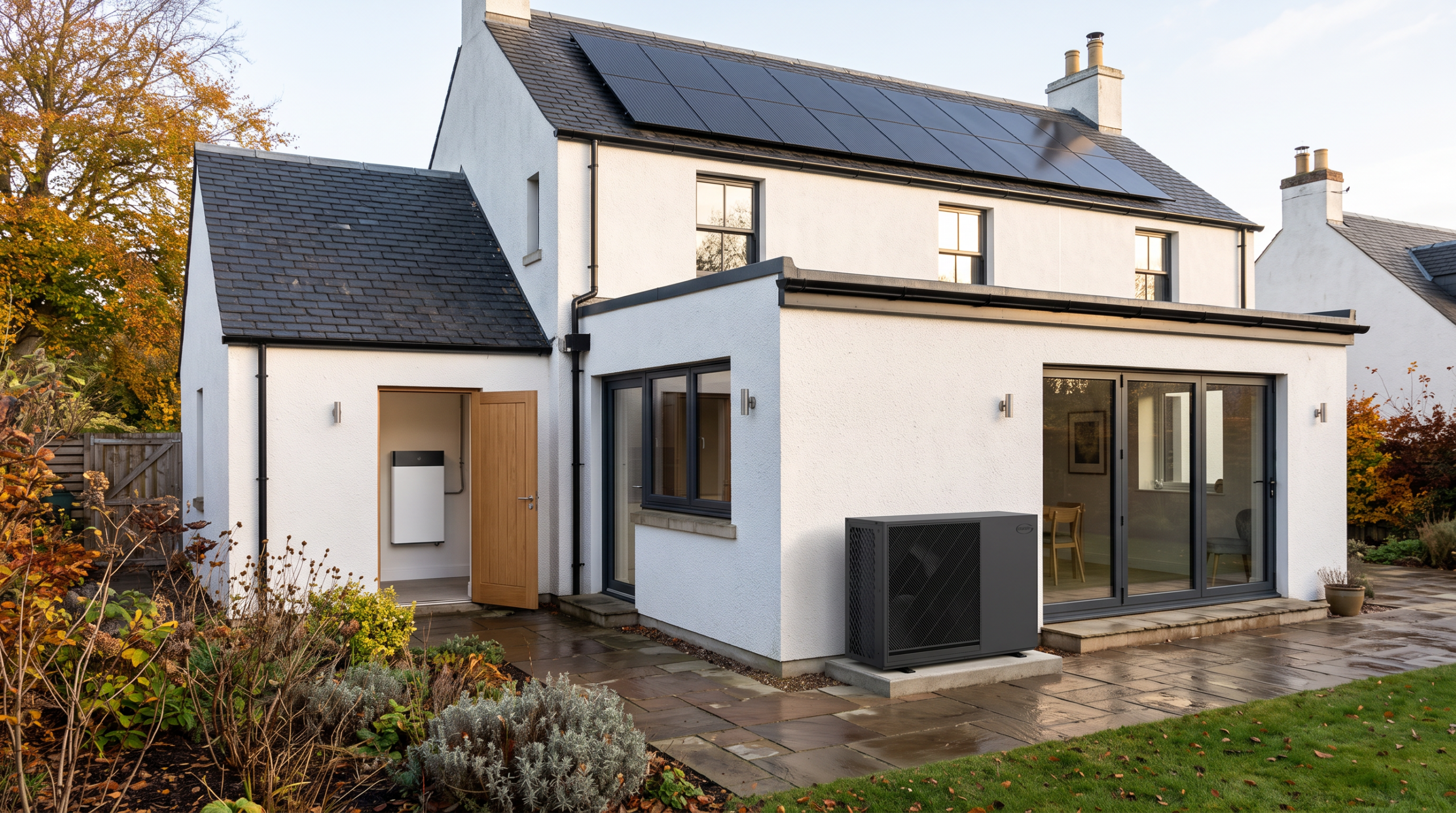
Installing an air source heat pump does not mean you also need solar PV, battery storage and underfloor heating immediately.
A heat pump can operate without these technologies. However, they can form part of a wider home energy system.
Solar PV can generate electricity at the property.
Battery storage can store electricity for use later.
Depending on your system and electricity tariff, this can give you more options for managing when electricity is generated, purchased and used.
Renewable Heat also designs integrated heat pump, solar and battery systems where this approach is appropriate.
But you do not need to install everything at once.
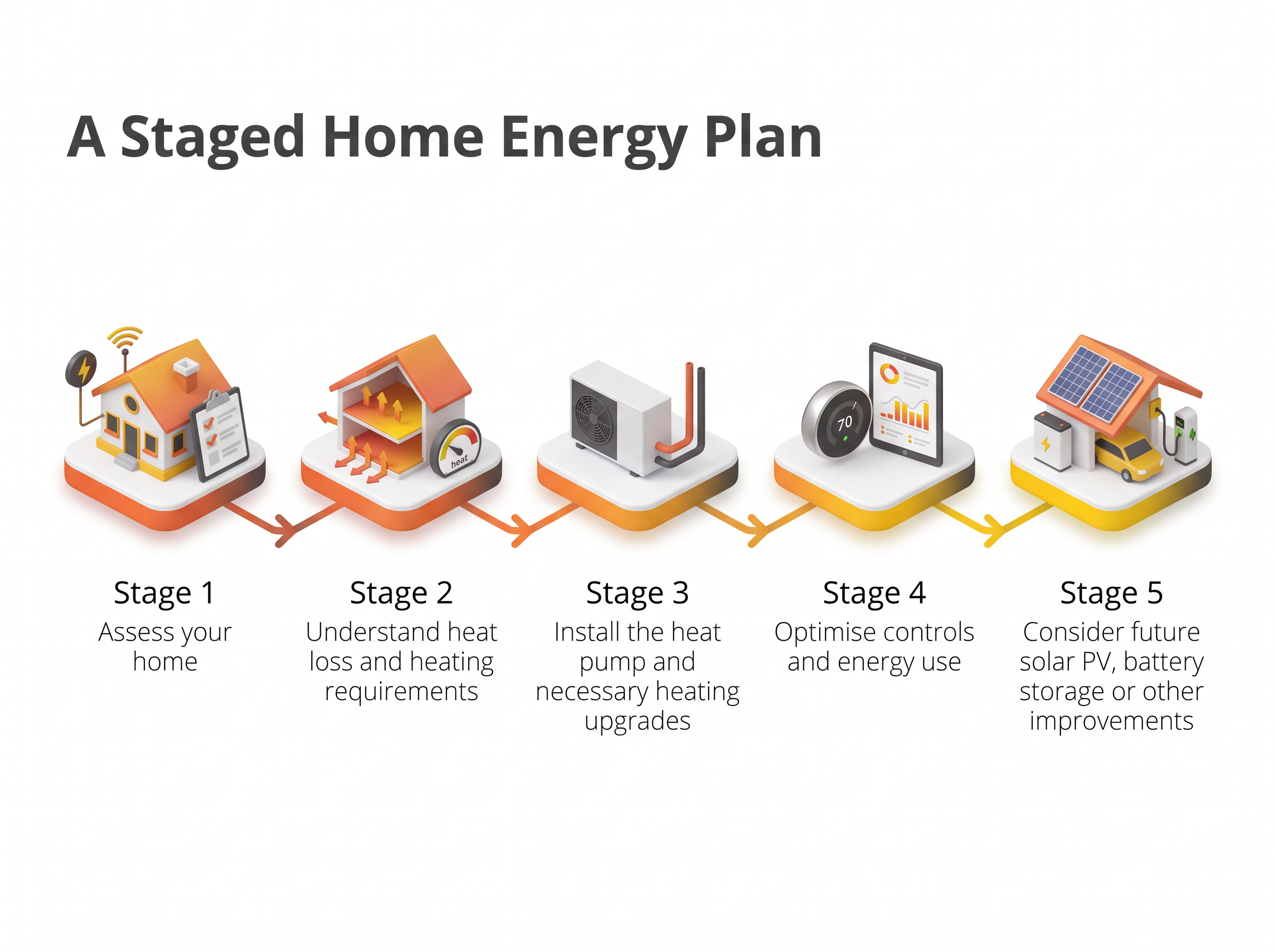
Can I Improve My Home in Stages?
Yes.
For many homeowners, this is the most practical approach.
You might start with the heating system and make other improvements later as your budget and plans develop.
What Happens After Installation?
The cost of a heat pump should not only reflect the work completed before and during installation. Support afterwards matters too.
Once installed, the system needs to be commissioned correctly. You should also be shown how to operate the controls and understand the basic settings before the installer leaves.
Regular maintenance can then help keep the equipment in good condition.
Renewable Heat provides repairs, servicing and maintenance for home energy systems.
Annual servicing is recommended, and remote monitoring may also be available for suitable systems.
When comparing installers, it is worth asking who will support you if you have a question or problem several years after the installation is complete.
So, What Does an Air Source Heat Pump Installation Really Cost?
There is no single figure that applies to every home.
For many Renewable Heat projects, a complete air source heat pump installation can cost around £20,000 or more before funding.
But the final figure depends on what your property actually requires.
A straightforward property with suitable existing radiators and pipework may require less additional work.
A more complicated retrofit with radiator upgrades, pipework alterations, a new cylinder and electrical work can require considerably more.
That is why an accurate quotation should follow a proper assessment.
The important thing is understanding what you are getting for the price.
A complete heat pump project is not simply the outdoor unit.
It is the assessment, calculations, system design, equipment, heating system improvements, installation, commissioning and ongoing support required to create a system that works properly in your home.
Start With a Proper Assessment
If you are considering an air source heat pump, do not begin by choosing a heat pump based purely on its advertised price.
Begin with your home.
Understand how much heat it needs.
Understand what parts of the existing heating system can remain.
Understand what needs to change.
Then you can make a much more meaningful decision about the cost.
Renewable Heat has more than 20 years of experience designing and installing home energy systems, including replacement heating systems and new build properties.
Our team can assess your existing system, calculate your heating requirements and explain what would be involved in moving to an air source heat pump.
We can also help you consider wider options including ground source heat pumps, underfloor heating, solar PV and battery storage where appropriate.
Call 0330 022 0480 or email info@renewableheat.com to arrange a home assessment and discuss the likely cost of an air source heat pump installation for your property.
COP tells you how efficiently a heat pump works under a particular set […]
If your boiler is nearing the end of its life, you have more […]
A heat pump uses electricity to provide heating and hot water. Solar panels […]


